
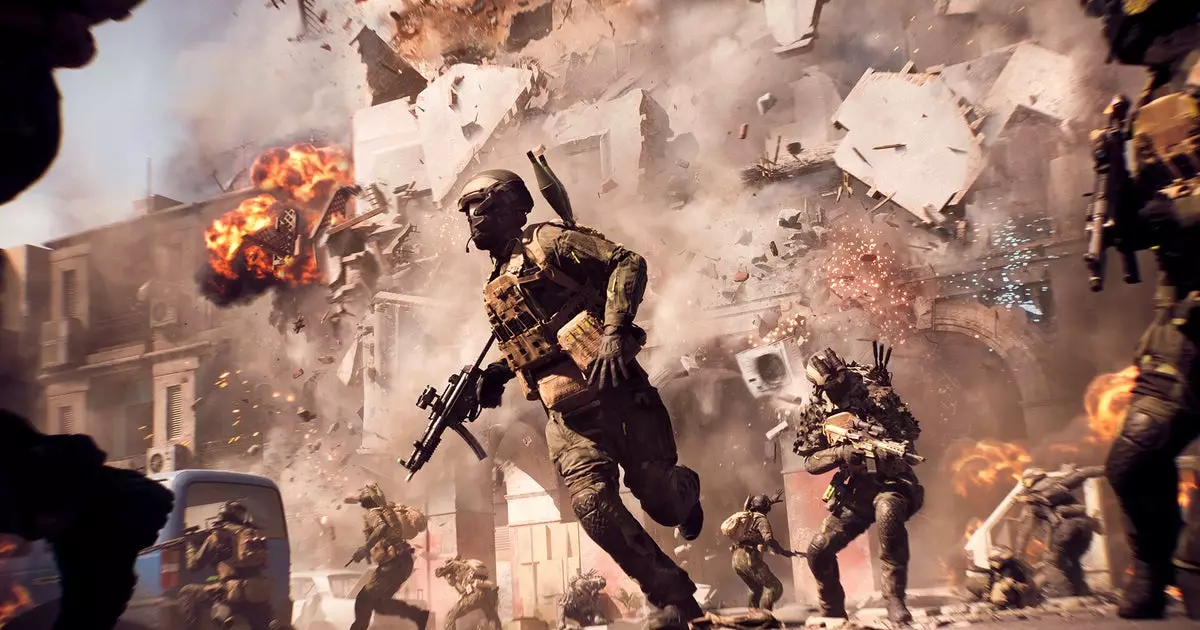
The recent unveiling of Battlefield 6 has ignited fervent anticipation among gamers eager to dive into the next chapter of this iconic franchise. While the initial excitement was deafening, a deeper look into the hardware requirements begins to temper expectations with practical insights. EA’s cautious transparency about the game’s specifications—though initially vague—provides enough clues to help players gauge whether their current rigs are up to the challenge. The minimum requirements suggest that quite a few gamers may find their existing systems capable of running Battlefield 6, provided they aren’t clinging to hardware that’s several years old.
The minimum specs—involving an Intel Core i5-7600K or AMD Ryzen 3 1200, 16GB RAM, and a GPU like the Nvidia RTX 2060—are within reach for many mid-tier PCs. However, EA’s omission of detailed performance metrics such as framerate or graphic fidelity at these settings leaves much to the imagination. Are these specs sufficient for a smooth 60FPS experience, or will players have to contend with lower settings and potential performance dips? The answer remains to be seen, but the fact that a relatively modest GPU such as the RTX 2060 is listed points toward accessibility. Those with machines that are around five years old might just squeak by, but don’t expect cutting-edge visuals or ultra-smooth gameplay at the baseline.
On the other hand, the recommended specs point toward a more demanding experience. Recommended PCs featuring an Intel Core i7-10700 or Ryzen 7 3700X, along with an RTX 3060 Ti or RX 6700 XT, suggest that to truly experience Battlefield 6 at its best, a high-performance GPU and CPU will be needed. Yet again, EA avoids defining what “recommended” truly means in terms of frame rates or visual quality, leaving players to interpret “decent” as their own measure. This ambiguity is a common theme in modern game releases, which often prioritize marketing hype over transparency.
The Logistics of Launching: Steam Versus Epic, and What It Means for Players
An important aspect of Battlefield 6’s release concerns platform access. For PC gamers, the decision to buy via Steam or the Epic Games Store has notable implications. The good news is that Steam users won’t need to launch EA’s app every time they want to play. This may be seen as a significant convenience, especially for those who dislike multiple launcher clutter or worry about performance hits. However, a mandatory EA account remains essential, acting as a necessary barrier to access regardless of platform.
In contrast, purchasers on the Epic Store will face a more cumbersome process, needing both the EA app and an EA account—a dual-layer requirement that could frustrate those seeking a seamless experience. It’s an odd choice reflecting EA’s larger strategy—balancing platform exclusivity against user convenience. The complexity of these digital rights management policies may not bother hardcore fans, but for casual players, it represents a UX hurdle that shouldn’t be underestimated.
Furthermore, EA’s statement that no prior Battlefield experience is necessary to enjoy Battlefield 6 indicates a strategic move to broaden the franchise’s appeal. By removing barriers to entry, Battlefield aims to attract newcomers, though it raises questions about how accessible the multiplayer experience genuinely will be for players unfamiliar with the series’ mechanics. Will new players find themselves overwhelmed by the chaos of modern warfare, or will the game provide a more intuitive onboarding process? Only time will tell, but the statement hints at a game designed to pull in a wider audience without requiring previous knowledge.
Anticipation Meets Skepticism: The Shadow of Past Launch Flaws
One overarching concern remains for many fans: the historically rocky launches of Battlefield titles. Past entries have often suffered from bugs, server instability, and performance issues at launch, casting a shadow on the excitement. The recent multiplayer trial, as recounted by enthusiasts like James, shows some promise but also underscores the fragility of these large-scale online battles. Persistent bugs and server issues could hamper the player experience at launch, undermining the game’s potential and the franchise’s reputation.
EA’s silence on specific performance expectations and their cautious approach to revealing detailed specs can be interpreted as a strategic delay—possibly to iron out issues before the public release. This approach, however, might frustrate those eager to upgrade their hardware or plan their launch day setup. Players should approach Battlefield 6 with cautious optimism and prepare for potential teething problems, especially since the franchise’s history suggests that birth pains are part of the process.
In sum, Battlefield 6 appears poised to continue the franchise’s legacy of high-octane multiplayer warfare, but only if EA can avoid the pitfalls that have marred previous launches. The hardware requirements hint at a game that’s both accessible and demanding, dependent on how much visual fidelity an individual player desires. Platform choices will influence the user experience, and a cautious approach to performance benchmarks indicates that players should temper expectations until more details emerge. The true test, however, will be whether EA can deliver on the gameplay promise without repeating past mistakes—and whether players are willing to invest in the hardware upgrades necessary to experience Battlefield 6 at its full potential.
Leave a Reply