
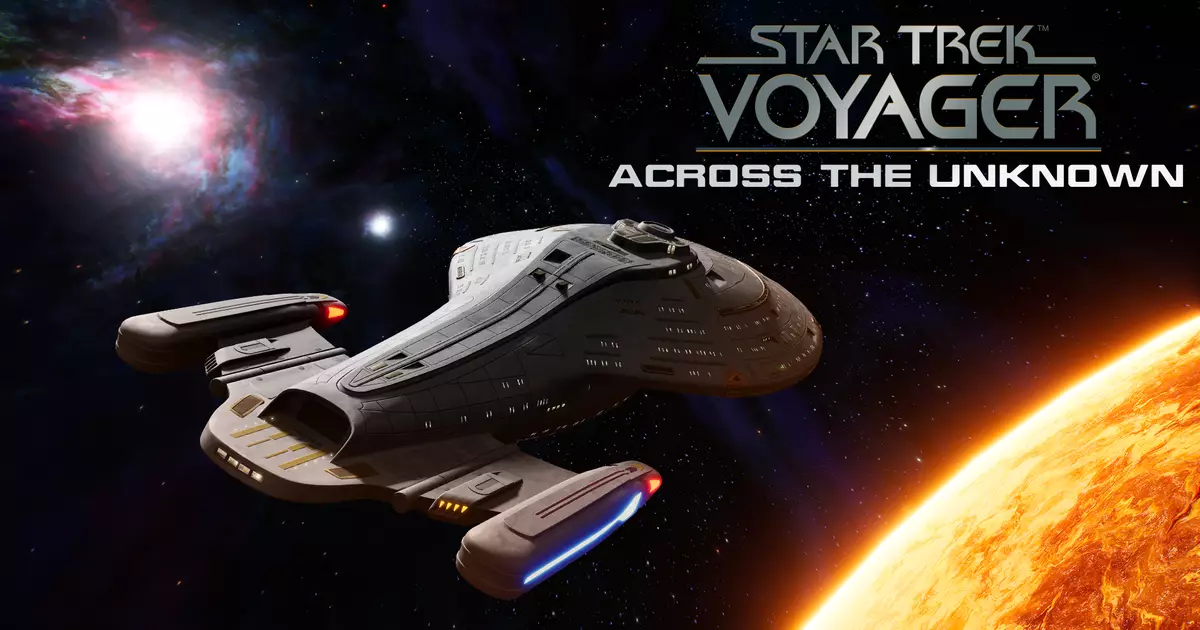
Star Trek: Voyager – Across the Unknown arrives as a fresh yet familiar challenge for fans and strategy enthusiasts alike. Merging the revered universe of the Starship Voyager with the mechanics of modern survival and strategy games, this title promises to offer an immersive experience that balances nostalgia with innovation. Instead of merely retelling familiar stories, it aims to expand them, inviting players to forge new paths amid the unknown reaches of the Delta Quadrant. This game boldly positions itself as more than just an adaptation; it seeks to redefine how we engage with the Voyager saga in a gameplay setting.
What sets this game apart from typical space simulators is its emphasis on narrative-driven decision-making. Players aren’t simply commanding a starship—they’re crafting a unique voyage through moral dilemmas, diplomatic negotiations, and system management. The integration of a base-building mechanic, reminiscent of XCOM, pushes players to personalize and upgrade Voyager from within, creating a sense of ownership over the ship’s development. It’s a deliberate push to meld the strategic with the personal, giving every choice weight and consequence. Such an approach not only energizes the gameplay but also deepens the emotional connection, echoing the camaraderie and struggles of the original series.
Nostalgia Meets Innovation: Balancing Fan Service with Tactical Depth
From the outset, the game exudes a nostalgic charm—complete with a dollhouse spaceship and a HUD that evokes a classic starship bridge. Ensign Harry Kim’s presence signals a recognition of the show’s core characters, but the game’s real magic lies in its ‘what-if’ scenarios. Fans, myself included, are naturally drawn to the tantalizing possibilities—what if Janeway had a Borg Queen moment? Could the Doctor be the captain? Such propositions fuel the imagination, transforming familiar characters into the vessels of alternate realities. This creative freedom enhances replayability and invites fans to explore uncharted narrative waters.
Yet, the game doesn’t seem content merely to cater to nostalgia. Its strategic elements—diplomacy or aggression, the research of hidden technologies, and variable crew dynamics—introduce layers of complexity that challenge players to think critically. The roguelite structure ensures that no two playthroughs are alike, reinforcing the unpredictability of deep space exploration. The danger of early crew casualties and the need for adaptability accentuate the stakes, making every decision impactful.
Nevertheless, skepticism arises regarding certain design choices, particularly the spaceship’s top-down movement within solar systems, which feels detached from the grounded, immersive atmosphere of the series. It threatens to diminish the sense of awe and envelopment that the original Voyager episodes conveyed. Despite this, the gameplay’s strength lies in its away missions, where players assemble teams and carefully weigh risks—a feature that taps into the strategic roots of tactical RPGs while maintaining a direct link to the narrative.
Challenging the Convention: The Potential and Pitfalls of Space Odyssey Gaming
The announcement raises intriguing questions about the direction of space-themed strategy games. While developer gameXcite’s history of comic adaptations seems unrelated to the vastness of the cosmos, their shift to a Star Trek setting hints at a willingness to step outside comfort zones. However, their lack of experience with space sims may lead to certain compromises, especially in the fidelity of space combat or ship management mechanics. This could either result in a fresh take that de-emphasizes hyper-realism for fun or produce a disjointed experience that struggles to meet genre standards.
Moreover, the game’s strategic depth hinges on the player’s willingness to engage with complex moral and tactical dilemmas. In a universe where decisions can lead to the destruction of crew or the salvation of entire species, this adds a layer of weight that is often missing in more superficial titles. If executed well, it could elevate Voyager – Across the Unknown beyond a mere simulation into a thought-provoking exploration of leadership and sacrifice.
On the flip side, the heavy focus on narrative alternates between compelling and potentially overwhelming. Fans expecting a straightforward space adventure might find the decision-laden gameplay taxing or divisive. Crucially, the game’s success depends on striking a balance: honoring the essence of Voyager while pushing the envelope into strategic territory.
Beyond the gameplay mechanics, the game’s preparation to embrace chaos and unpredictability through rogue elements signifies an ambitious attempt to modernize a beloved universe. Whether this leap pays off or ends up feeling forced remains to be seen. The game holds the promise of capturing the essence of Voyager’s resilience while challenging players to think beyond traditional starship combat.
This upcoming title embodies a bold intersection of nostalgia and innovation—an attempt to breathe new life into a cherished science fiction franchise while testing the limits of strategic gameplay. Its true impact will depend on how well it can marry these contrasting elements into a cohesive, compelling experience. For now, Voyager fans and strategy gamers alike await its voyage into uncharted territory.
Leave a Reply