
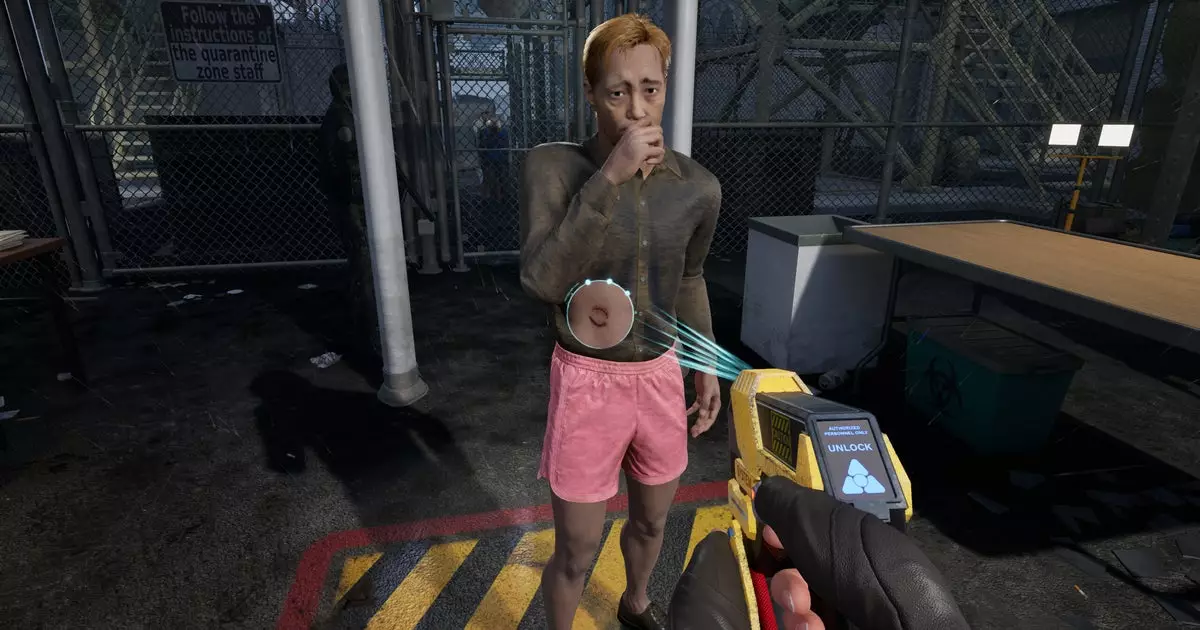
When immersed in the tense environment of a zombie-infested quarantine checkpoint, the core challenge transcends mere survival. It becomes a profound test of human judgment, empathy, and morality. Unlike typical horror narratives or simple game mechanics designed to “fight or flee,” a game like *Quarantine Zone* forces players to grapple with the delicate task of distinguishing between innocent suffering and deadly contagion. This subtle balance underscores the importance of nuanced decision-making, as every choice carries weighty consequences. Unlike automated AI systems or rigid rules, human judgment in such scenarios requires contextual understanding—a trait often sidelined in traditional games, but central here.
This focus on judgment highlights the broader philosophical debate: How do we determine who deserves empathy and protection in times of crisis? The game’s mechanics shine a spotlight on this dilemma, challenging players to look beyond superficial cues. An individual with a fever or a disheveled appearance might be a victim of circumstance, yet the risk of infection cannot be ignored. Conversely, dismissing someone as harmless when they’re hiding an infection could lead to catastrophe. The game’s success hinges on this tension, compelling players to navigate the grey areas of morality rather than sticking to black-and-white decisions.
The Paradox of Authority and Compassion in Crisis Management
A key strength of *Quarantine Zone* lies in its portrayal of authority figures who must balance enforcement with compassion. In post-apocalyptic fiction, institutions are often depicted as either oppressive or uncaring; here, the player embodies a figure caught between these extremes. The game challenges the assumption that decisiveness equates to brutality. Instead, it suggests that effective leadership during chaos requires both firm resolve and empathetic discernment. This duality resonates with real-world crisis management, where authorities often face backlash for perceived harshness or negligence, despite operating within a framework of limited resources and high stakes.
Furthermore, the game implicitly critiques the dehumanization often seen in border control and pandemic responses. The setting—an overrun checkpoint—becomes a metaphor for societies trying to maintain order amidst disorder. Not everyone who appears sick should be automatically condemned, just as not everyone flagged as a threat truly is one. By emphasizing the importance of detailed inspection tools—like UV flashlights and thermometers—the game advocates for a reliance on evidence and science, but also reminds players that judgment ultimately involves a human touch.
Deconstructing the Horror: The Human Condition Amidst the Apocalypse
Interestingly, *Quarantine Zone* not only creates tension through gameplay mechanics but also invites reflection on our collective response to pandemics and societal collapse. Its depiction of a tense, resource-limited environment echoes real crises where decision-makers are forced into morally grey areas. The game subtly questions the ethics of prioritizing public safety over individual rights, and vice versa, raising awareness about the human costs of such decisions.
However, beneath this critical lens, the game’s satire—particularly its playful notion of discerning whether people are Buster Keaton or Barney the Dinosaur—serves as a reminder of the absurdity inherent in crisis scenarios. It demonstrates that humor and compassion are vital tools even in dire circumstances. Recognizing potential humor amid chaos can preserve sanity and foster resilience. It’s a testament to the resilience of the human spirit that, even in a bleak, zombie-overrun world, there’s room for levity and genuine human connection.
This approach suggests that beyond the mechanics of infection control and resource management, cultivating empathy and humor can be powerful means of navigating chaos. The dissonance between survival and kindness becomes the real battleground, emphasizing that humanity’s greatest strength is often our capacity for empathy amidst adversity. The game, with its blend of grim realism and satirical playfulness, underscores that even in the darkest times, our moral choices define us far more than the monsters lurking in the shadows.
Leave a Reply