
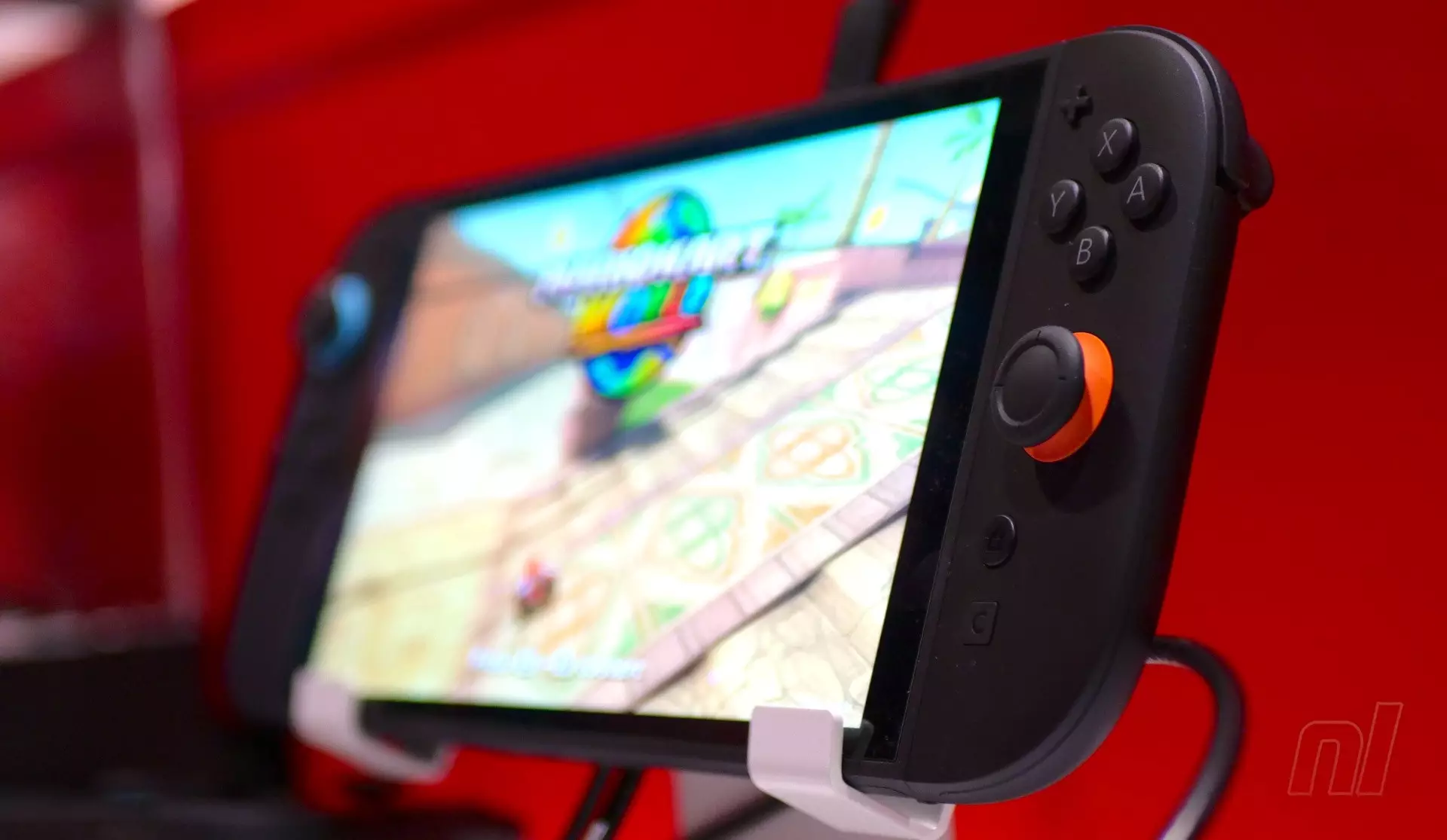
In the rapidly evolving landscape of gaming consoles, the Nintendo Switch 2 emerges as a device shrouded in both anticipation and skepticism. Many industry insiders and developers have attempted to quantify its prowess by comparing it to established powerhouses like the Xbox Series S and PlayStation 4. Yet, these comparisons often miss the nuanced reality of hardware design and software integration. Rather than fitting neatly into existing categories, the Switch 2 challenges our preconceived notions of what a portable console can achieve. It’s easier to see it as a hybrid entity—neither fully successor nor mere update—offering unique advantages that, if leveraged correctly, could redefine what a gaming console can do.
What’s evident from early discussions is that official performance metrics don’t tell the full story. While the GPU of the Switch 2 lags slightly behind the Series S in raw power, it compensates with technological enhancements like DLSS support. These features could blur the lines traditionally drawn between consoles based purely on hardware specs. Conversely, when examining CPU performance, the Switch 2’s core design resembles a more powerful PS4, hinting at a scale of processing capability that’s more aligned with older, established benchmarks than current-gen systems. This disparity raises questions about the significance of raw numbers versus real-world performance and developer flexibility.
Platform Specifics and Developer Realities
The commentary from industry veterans points to a critical truth: hardware comparisons are inherently complex. For developers, the challenge isn’t just whether a game can run on a certain device but how well it can be optimized to utilize its strengths. The Switch 2’s GPU, although somewhat less potent than the Series S, possesses features that could give it an edge in visual fidelity, particularly in portable modes. The use of advanced technologies like DLSS means that some games might enjoy enhanced resolution and frame rates, making titles look sharp despite hardware limitations.
However, the CPU differentiation is more straightforward. Since CPU-bound processes—complex physics, AI calculations, detailed animations—require significant processing muscle, games that rely heavily on such features might need more effort to optimize for the Switch 2. Yet, for titles aiming for 30 or 60 frames per second, the system’s architecture suggests a promising compatibility, especially if developers tailor their scaling strategies accordingly.
This raises a compelling point about the purpose of hardware: it’s not solely about being the most powerful. The real challenge—and opportunity—lies in how the Switch 2’s capabilities are harnessed to deliver engaging, visually appealing experiences that are accessible across a range of devices. It’s a test of ingenuity as much as raw performance.
Reimagining Portability and Performance Synergy
The industry’s optimistic early takes—labeling the Switch 2 a “technical marvel”—highlight a broader shift in gaming philosophy. Rather than competing solely on power metrics, Nintendo’s new device aims to blend performance with portability and innovative features. Support for advanced technologies like DLSS signals a commitment to upscale efficiency, potentially allowing developers to deliver console-quality visuals in a compact, handheld form.
Such a strategy could challenge conventional wisdom in the console space. If the Switch 2 manages to combine respectable performance with fluid mobility and creative features, it offers a new paradigm—one where power isn’t the sole metric of success. Instead, versatility and optimized experiences become more valuable. This vision might redefine expectations, opening doors in both indie development and AAA titles, as developers learn to exploit the hybrid nature of the hardware.
In sum, the Switch 2’s true potential resides not just in its internal specs but in the innovative ways developers and players embrace its unique position. If Nintendo can leverage its technological strengths and foster an ecosystem that promotes efficient porting and optimized gameplay, the device might far surpass initial benchmarks and reshape our understanding of what a gaming console can be.
Leave a Reply