
Nintendo’s approach to gaming has always thrived on pushing boundaries and introducing novel ways to interact with games. Since the debut of the Wii’s motion-controlled revolution, gamers have been scrutinizing every peripheral that attempts to mimic real-world actions. While some have been groundbreaking, others—like the infamous Wii Wheel—have become emblematic of experimental missteps. Despite initial enthusiasm, seasoned players quickly discovered that these plastic add-ons often sacrificed precision, turning what could have been intuitive experiences into frustrating exercises in patience. This pattern has persisted into Nintendo’s subsequent console generations, including the Switch, which saw its own range of dedicated accessories that promised enhanced fun but often fell short of delivering meaningful performance improvements.
With the advent of Switch 2, Nintendo is once again eager to reintroduce their plastic wheels, promising a more refined experience. However, the core question remains: Are these additions merely superficial, or do they hold genuine potential to enhance multiplayer chaos? Beneath the surface, these accessories reflect Nintendo’s ongoing struggle to marry fun and functionality; they are at once playful and flawed, yet undeniably part of the console’s charm. Instead of dismissing them outright, it’s worth looking deeper to understand their true value in a competitive and casual gaming context.
Refined Design Bolsters Accessibility, Not Precision
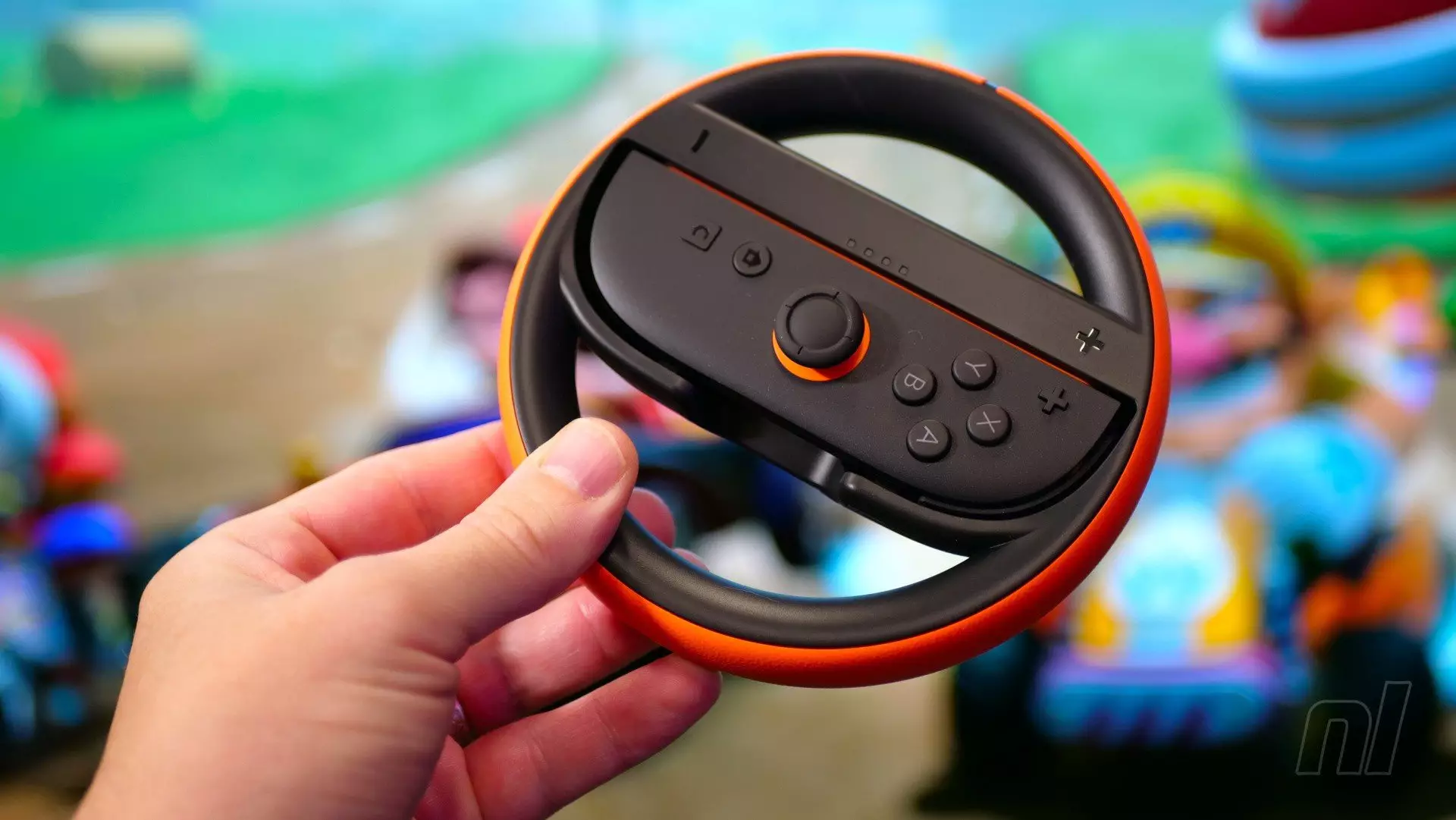
One of the noticeable upgrades in Nintendo’s latest wheel design is its adaptation for larger Joy-Con controllers. This change demonstrates a thoughtful acknowledgment of hardware evolution, with aesthetically pleasing touches such as colorful bands that provide additional grip, making prolonged use more comfortable. The sleek, screw-free appearance contributes to a more polished look—an attempt to elevate the accessory from mere toy to a legitimate part of the Mario Kart experience. The incorporation of magnetic attachment ensures a quick, secure connection, allowing players to effortlessly slot their Joy-Con 2 controllers and have them automatically paired thanks to smart magnetism—a small but notable step toward user convenience.
On the back, the presence of accessible shoulder buttons directly aligned with the controller’s triggers aims to replicate the typical button layout, which might marginally improve some control responses. However, beneath this superficial upgrade lies a fundamental limitation: the wheel remains an overly simplified, ‘floating’ device that does not attach firmly to any steering column or fixed structure. For casual players, this floating mechanism can be oddly immersive, providing a tactile sense of steering that’s absent when solely using the thumbstick. Yet, for anyone desiring precision—think seasoned Mario Kart veterans or competitive players—the limitations are glaringly apparent. The inability to register nuanced turns results in a control scheme that often feels more like a game of trial and error than skillful driving.
Casual Fun Over Competitive Precision
While the technical shortcomings are evident, dismissing these wheels as ineffective would ignore their intended audience: casual, family-friendly gamers, and younger players looking for fun rather than perfection. The charm lies in their simplicity. These wheels foster spontaneous, chaotic multiplayer sessions that prioritize enjoyment over accuracy, fostering an atmosphere where laughter and camaraderie take precedence over winning margins. In multiplayer games where everyone is wielding the same limited-precision equipment, the experience becomes more about shared entertainment than competitive mastery.
Furthermore, affordability plays a significant role in their appeal. Priced at around £16.99 or $25 for a pair, these accessories are accessible entry points for families or friends eager to turn a regular game night into a lighthearted race. They provide a platform for inclusive play, encouraging players of all ages and skill levels to participate without the intimidation of needing high-level controllers or complex setups.
Are They Worth It? A Matter of Perspective
Despite the repeated flaws—imprecision, reliance on ‘floating’ mechanics, and the inability to match the finesse of a Pro Controller—the value of Nintendo’s latest wheels cannot solely be judged on their technical merits. Instead, their worth should be measured by the kind of experiences they foster. When approached with the right mindset, these accessories can spark moments of hilarity, unexpected victories, and memorable mishaps that enrich social gaming sessions.
For dedicated racers seeking competitive edge or speed, these wheels are unlikely to satisfy. Precision, after all, remains elusive when your controlling device is essentially a plastic prop that ‘floats’ in mid-air. Yet, for an audience more interested in spontaneous, unpretentious fun, they serve as a surprisingly charming tool that encourages creativity and playfulness. The fact that they can be easily shared without significant expense also makes them an attractive proposition for broad, inclusive gaming.
Nintendo’s new wheels exemplify the company’s tendency to blend innovation with imperfection. Rather than viewing them as necessary upgrades or serious controllers, it’s better to see these accessories as catalysts for joy and comedic chaos. They remind us that sometimes, the most memorable gaming moments are those born out of simplicity, silliness, and a willingness to embrace imperfection—an ethos that has defined Nintendo’s legacy for decades.
Leave a Reply