
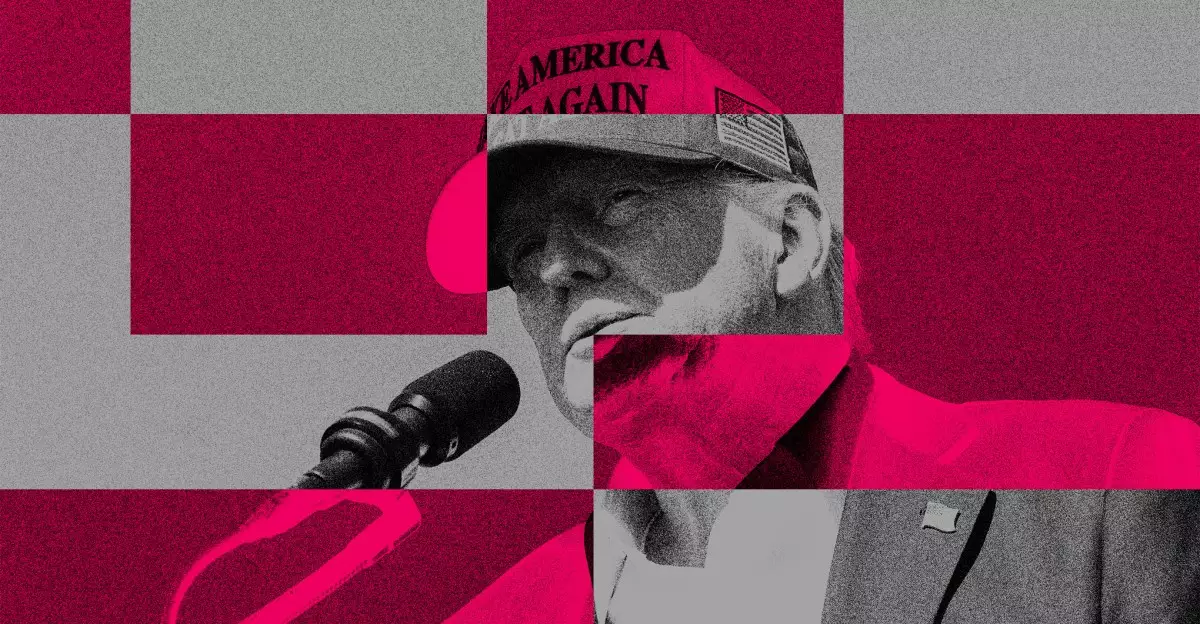
In an era where social media dictates political narratives and public engagement, the Trump administration’s recent foray into TikTok signals a strategic shift that defies conventional governmental approaches. Despite the ongoing legal battles and unresolved negotiations with ByteDance, the creators of TikTok, the decision to establish a White House presence on the platform demonstrates an astute understanding of the influence wielded by social media giants. This act isn’t merely about maintaining visibility; it’s a calculated move to reclaim narrative control and demonstrate adaptability, even amidst legal uncertainty.
The significance of this move extends beyond simple outreach. It underscores a broader recognition within political leadership that platforms like TikTok are no longer optional but essential arenas of influence. By establishing an official account, the Trump administration leverages the platform’s viral power to shape public perception, rally supporters, and potentially sway political momentum in their favor—regardless of unresolved legal disputes. Far from a mere publicity stunt, this act represents a sophisticated assertion of digital resilience and strategic positioning in a landscape where social media can make or break political careers.
Legal Ambiguity as a Strategic Tool
While opponents of TikTok emphasize national security and data privacy concerns, the Trump administration’s persistent engagement, despite unresolved legal threats, highlights a different strategic calculus. The administration’s decision to operate an account without a finalized deal with ByteDance suggests a prioritization of influence over legal formalities. It’s an acknowledgment that in today’s interconnected world, control over narrative channels can sometimes eclipse formalities and legal barriers.
The extension of delays—initially prompted by executive orders and further prolonged due to diplomatic and economic negotiations—reflects a complex dance of political interests. It’s a game of chess, where action and inaction are equally calculated. The decision to continue operating on TikTok without a legal deal pushes the boundaries of government authority, signaling that leveraging popular platforms may sometimes take precedence over traditional legal constraints. This approach not only maintains the administration’s relevance but also poses a challenge to the narrative of censorship—it suggests that control is more about influence than outright banishment.
Winning the Information War Through Viral Content
The rise of the Trump campaign’s official TikTok account, @TeamTrump, exemplifies how savvy use of social media can redefine electoral dynamics. Capitalizing on TikTok’s entertainment-centric culture, the campaign generated record-breaking viewership, surpassing that of traditional political campaigns and even rival candidates. Here, Trump’s background as a reality TV star becomes an asset, allowing him to craft content that resonates emotionally and virally with younger audiences.
This approach reveals a deeper insight: in modern politics, raw attention often translates into tangible power. A viral video can reach millions, influence opinions, and energize supporters far more effectively than traditional media. Trump’s ability to manipulate the platform’s entertainment-driven algorithms, generating engaging content, points to a broader shift where political campaigns must think like media consumers. It is a reminder that modern political resilience hinges on mastering the digital landscape—an arena where authenticity, entertainment, and strategic messaging determine influence.
Implications for Democracy and Governance
The administration’s complex relationship with TikTok exemplifies the blurred lines between governance, influence, and commerce. While some argue that banning TikTok is rooted in national security, others see it as a means to silence a platform that empowers alternative political voices. The fact that Trump’s team continues to operate on TikTok, even amidst legal uncertainty, raises questions about the sincerity of government efforts to regulate digital influence.
This situation exemplifies how political actors leverage digital tools not only for communication but also for power consolidation. The ability to infiltrate and dominate social media spaces is now an integral part of political strategy, often at the expense of transparency and accountability. The Trump administration’s approach indicates a recognition that digital influence can be a pivotal asset in shaping public discourse—an asset that can be wielded with or without formal legal backing.
By flexing their digital muscles in a space dominated by entertainment and virality, political leaders reveal that competitive influence in the modern era is less about formal mandates and more about strategic presence. This realization poses profound questions about how democracies function in a digital age—where control of narrative space often overrides traditional legal frameworks—and whether future governance will be defined more by social media dominance than by legislative authority.
Leave a Reply