
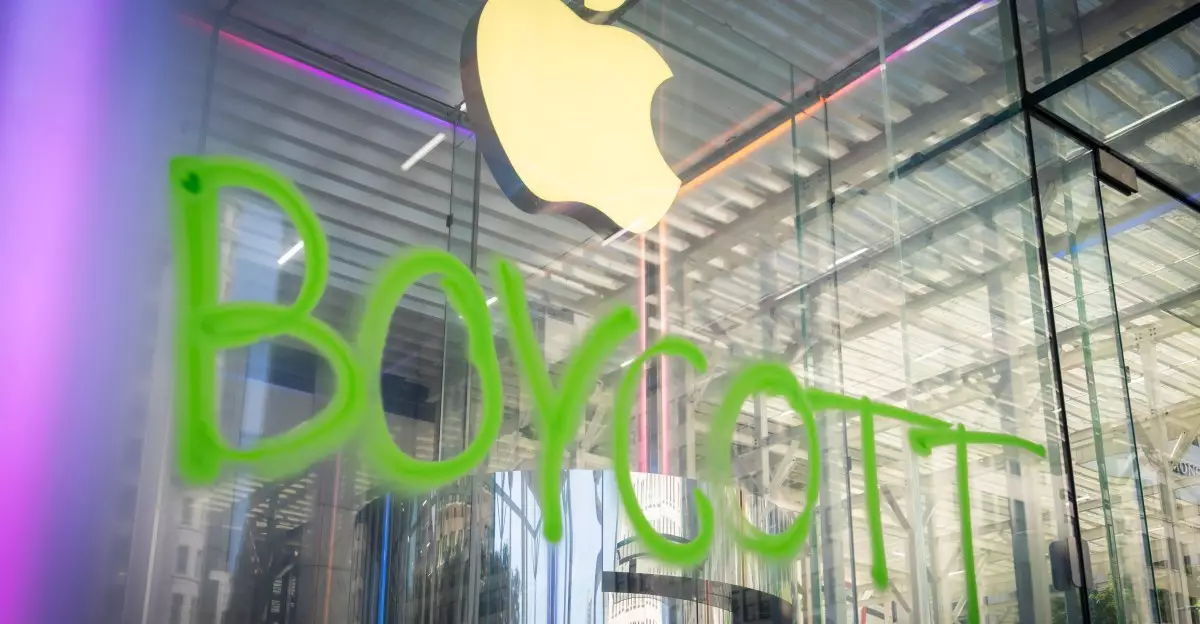
In recent years, towering tech corporations such as Apple, Google, and Microsoft have projected an image of environmental stewardship, often narrating stories of sustainability and climate activism. However, beneath this polished surface lies a stark contradiction. These giants capitalize on the rhetoric of ecological responsibility, yet their actions often tell a different tale—one marked by selective commitments, misaligned priorities, and a disturbing lack of accountability. The recent protests at Apple’s Fifth Avenue flagship exemplify this dissonance, suggesting that despite public proclamations, genuine climate action remains elusive in the corridors of power within Big Tech.
The protest—marked by spray paint and vociferous chants—highlighted an uncomfortable truth: many of these corporations have strategically positioned themselves as allies of the environment, even as their political and economic maneuvers undermine global climate efforts. Activists from Extinction Rebellion drew attention to the glaring contradictions between corporate declarations of sustainability and their behind-the-scenes political allegiances that facilitate environmental rollback. The image of CEOs like Tim Cook attending political gatherings supporting policies that dismantle the very regulations aimed at curbing climate change underscores this duplicity, forcing a re-examination of corporate motives.
Performative Activism or Genuine Commitment?
While superficial gestures—such as announcing investments in renewable energy or setting carbon neutrality targets—may appear commendable, critics argue these are often mere smokescreens. They serve to detract from the more pressing issue: the sustainment of a business model heavily reliant on resource extraction, data centers, and energy consumption. For instance, as Google’s emissions increased last year by 11%, and data centers’ energy demands soared, these expansions threaten to offset any emissions reductions promised through renewables. The hypocrisy is laid bare when the environmental sacrifice is borne by the planet, but the benefits—substantial profits, market dominance, and shareholder value—remain firmly in the hands of a small elite.
The protests, particularly the act of spray-painting messages like “Tim + Trump = Toxic,” reveal a frustration rooted in the perception that these corporations are more interested in public relations than actual climate justice. When CEOs appear at politically charged events or fund campaigns supporting climate-damaging policies, it’s difficult to reconcile their advocacy with their actions. The narrative that these leaders are champions of the environment collapses under scrutiny, revealing instead that climate promises are often empty gestures aimed at maintaining consumer loyalty and investor confidence.
The True Cost of Tech’s Climate Hypocrisy
Beyond corporate optics, the real victim in this saga is our planet. As data centers continue consuming astronomical amounts of power—often fueled by fossil fuels—the environmental cost escalates exponentially. The energy demands of burgeoning AI technologies threaten to overshadow efforts to reduce carbon footprints, demonstrating that innovation in one area can inadvertently accelerate environmental degradation elsewhere.
Furthermore, the political backing these corporations lend to figures like Donald Trump—who has long advocated for rolling back environmental protections—exposes a dangerous alliance that undermines global climate goals. This is not just a matter of corporate image but a fundamental threat to ecological stability. Policies enacted or supported by these corporations and their leadership directly influence legislative landscapes, often favoring corporate interests over planet-wide sustainability.
From a moral perspective, it’s deeply hypocritical for these companies that publicly claim “to support climate action” to then donate to politicians whose policies accelerate climate change. Such actions amplify the narrative that profit and political allegiance trump ecological responsibility. The protesters’ call to “dump Trump, Apple!” encapsulates this frustration—a demand for integrity over superficial activism.
The Road Ahead: Challenging the Hypocrisy
The public’s increasing awareness and activism signal that the era of corporate greenwashing is nearing its end. Consumers are no longer swayed by empty promises; they demand authenticity and accountability. As tech companies continue to expand their influence, they must face mounting pressure to align their financial pursuits with genuine climate commitments. Merely branding themselves as sustainable is inadequate; impactful change requires transparency, accountability, and a willingness to confront systemic issues.
The unresolved contradiction between corporate rhetoric and action calls for a more critical approach to evaluating corporate responsibility. Activism, such as the recent protests, plays a vital role in questioning complacency and exposing hypocrisy. Ultimately, the dialogue must shift from surface-level green initiatives to a deep, structural transformation where environmental sustainability is prioritized over profits.
The spectacle of protests against Big Tech’s climate hypocrisy underscores a critical truth: real change demands integrity, not performative gestures. As society’s awareness grows, so too must our expectations of corporations—who must be held accountable for their role in shaping the planet’s future. Anything less perpetuates the cycle of deception and environmental destruction.
Leave a Reply