
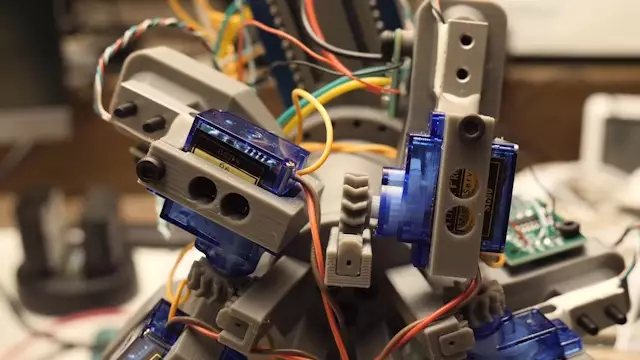
In the realm of security and hacking, the human element has traditionally been at the forefront—skilled lock pickers, meticulous safes, and complex mechanical barriers. However, the advent of robotics designed to automate and optimize lock-picking processes signals a paradigm shift. The concept of deploying tiny, physics-informed robots capable of deciphering and manipulating locks introduces a fascinating intersection of engineering, computer science, and criminology. This innovation challenges the long-held notion that lock-picking is an exclusively manual craft, opening possibilities for rapid, precise, and potentially covert entry mechanisms. It embodies the aspiration to transcend human limitations by developing machines that can adapt and respond with sensitivity unmatched by manual techniques.
The Mechanics of Physics-Based Lock Picking
Traditional robotic lock pickers have relied heavily on brute-force tactics or pre-programmed routines. These methods, while effective against simple locks, struggled with the complexity of high-security safes and advanced locking mechanisms. The current trajectory emphasizes integrating physics—specifically, sensing the physical forces within a lock—to refine robotic intervention. For instance, sensors that detect tension in lock pins emulate a human locksmith’s tactile feedback, allowing the robot to gauge the relative resistance during pin setting. Such systems leverage the intricate understanding of mechanical tension to make calibrated movements, perfectly suited to various lock types. Achieving this sensorimotor mimicry is a nuanced endeavor because it involves not only hardware capable of detecting minuscule forces but also sophisticated algorithms to interpret that data in real-time.
The Challenges and Limitations of Current Robotic Lockpicking
Despite the promising premise, creating a robot that effectively interacts with mechanical locks remains an elusive goal. Several projects, including those by the YouTube channel Sparks and Code, have exemplified the arduous journey from concept to reality. Initial attempts, which relied on brute-force mechanisms, proved inefficient, taking days to crack simpler locks. The transition toward physics-based sensing introduced high hopes of dramatically speeding up these operations, but technical hurdles swiftly emerged. Fine-tuning sensors to accurately read tension without misinterpretation is complex, compounded by the diverse mechanical designs of actual security locks. External variables, such as lock wear and manufacturing variances, complicate universal solutions. As a result, projects can stagnate or regress, often ending in failed prototypes that sit in the metaphorical “shame bin” of experimental endeavors.
The Ethical and Security Implications
The development of lock-cracking robots has profound ethical implications. While innovation pushes industry standards forward, it also lowers the barrier for malicious actors seeking unauthorized access. The more precise and faster these robotic systems become, the greater the risk of misuse—especially if they can bypass high-security mechanisms. On a positive note, such research can serve as a double-edged sword; it enables security professionals to better understand vulnerabilities and reinforce their defenses. Ultimately, the balance between technological progress and ethical responsibility must be carefully managed to prevent abuse, while still fostering innovation that benefits benign security testing and forensic analysis.
Looking Ahead: Toward Smarter and More Adaptive Lock-picking Robots
Despite setbacks and ongoing challenges, the pursuit of physics-based robotic lockpicking is far from dead. Each iteration pushes the envelope of what machines can achieve when they emulate human tactile intuition. Advances in sensor technology, machine learning, and adaptive algorithms promise a future where these robots could evolve into invaluable tools—both for security professionals and for those with malicious intent. It’s not just about making robots that mimic the physical act of lock-picking; it’s about creating intelligent systems that understand the mechanics deeply enough to adapt, predict, and efficiently bypass security measures.
While mainstream deployment of such robots remains in the experimental stage, the trajectory is clear: the security landscape is inevitably shifting towards automation and sophistication. Whether these innovations herald the beginning of a new era in cybersecurity, or serve as tools for malicious exploitation, depends largely on how developers, security experts, and policymakers steer this technological wave. What remains indisputable is that physics-guided robotics for lockpicking exemplify a future where engineering brains and mechanical brawn converge—paving the way for a new frontier in both security and hacking.
Leave a Reply