
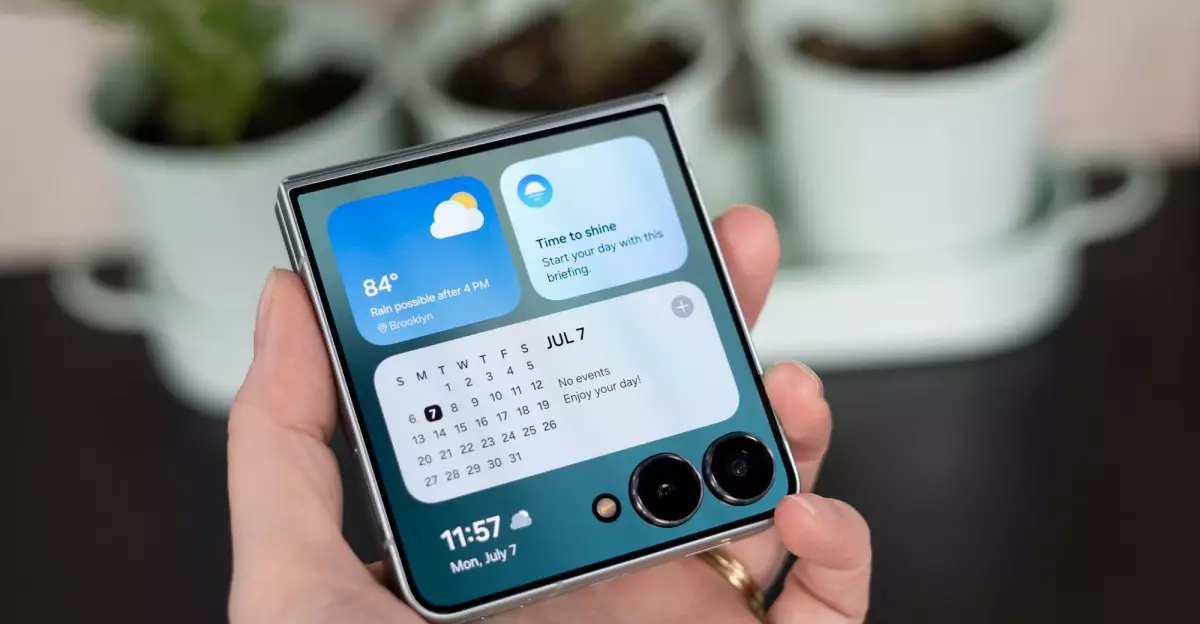
In recent years, the resurgence of flip and foldable phones has sparked both excitement and skepticism among tech enthusiasts and casual users alike. While classic flip phones evoke nostalgia, their modern counterparts have tried to blend retro design with state-of-the-art technology. Yet, despite improvements, the core challenge remains unchanged: making foldables durable and practical enough for everyday life. The appeal of flip phones lies in their form factor—small, sleek, and capable of transforming from a compact device to a large-screen powerhouse. However, this magic comes with a price. Consumers are often deterred not just by the premium costs but by lingering doubts about durability—particularly, dust ingress that threatens the fragile inner screens.
These devices are marketed as innovative gadgets, but beneath the surface, they grapple with the legacy of their design. The allure of flipping open a device or snapping it shut remains strong, but the moment users start to examine the material integrity and resilience, cracks begin to appear. Dust, dirt, and moisture are the silent enemies of foldable screens, especially those with intricate hinges and flexible inner displays. Though manufacturers have made significant strides, true dust resistance remains elusive in this niche, making many users question whether these devices are suitable for daily, reliable use.
Dust Intrusion: The Hidden Enemy of Foldable Innovation
When Samsung unveiled its early foldable smartphones, like the Galaxy Fold, the industry saw a leap forward in design—yet, almost immediately, serious issues surfaced. Reports from reviewers highlighted a common enemy: tiny particles infiltrating the hinge area or getting pressed against the inner screen, leading to bulges, dead pixels, or even catastrophic display failures. The problem was the so-called “dust march,” a silent but destructive invasion that could compromise the entire device. Manufacturers responded with water-resistant ratings, but these mainly guard against water ingress, not airborne particles.
Most foldable devices now carry an IP48 rating—meaning they are protected from limited dust ingress but not dust tight. While that might seem sufficient for casual use, it leaves a massive vulnerability. Small particles smaller than a millimeter can find their way into the hinge mechanisms or beneath the screens, causing damage over time. This is a critical flaw that underpins the entire foldable revolution. Without comprehensive dust resistance, foldables risk becoming gimmicks rather than lasting devices.
Despite technological advances like reinforced hinges and sealing gaskets, achieving an IP68 level—fully dustproof and waterproof—for flip and fold devices remains a formidable challenge. The very nature of their flexible displays and hinges makes airtight seals difficult to implement without sacrificing functionality or increasing costs. Consequently, manufacturers are caught between the desire to innovate and the harsh realities of mechanical engineering limits.
The Struggle for Truly Dustproof Folding Devices
The quest for a dustproof foldable device represents more than just a technical challenge—it is a pivotal criterion for mass adoption. Without robust dust and debris resistance, these phones risk limited longevity and user distrust. Samsung’s recent models, with incremental improvements, still offer only limited protection. It’s telling that even top industry players acknowledge that achieving true dustproof status is “difficult,” as Samsung’s Minseok Kang openly admits.
The industry buzz suggests that the next generation of foldables, such as Google’s rumored Pixel 10 Pro, might finally deliver this elusive feature. If Google manages to incorporate true dust resistance without sacrificing the seamless hinge mechanics and flexible screens, it could revolutionize consumer perception. But such innovations don’t emerge overnight; it requires rethinking core hardware design and investing in new sealing technologies.
Meanwhile, an examination of global markets reveals a stark contrast. Other manufacturers like Oppo, Huawei, and Xiaomi offer foldables outside the US that may boast better dust resistance, but these models rarely make it to Western markets. This leaves US consumers with fewer options and higher doubts about long-term durability. It’s a missed opportunity—one that could be bridged if industry leaders prioritize developing truly dustproof foldables.
Imagining a Dustproof Future for Foldable Phones
If manufacturers can overcome the last technical hurdles, foldable phones could finally justify their premium price tags and serve as reliable, everyday devices. The potential benefits are enormous: larger screens in a pocket-friendly form, seamless multi-tasking, and innovative user experiences that stay flexible regardless of the environment.
The road ahead demands a paradigm shift—moving beyond IP48 ratings and striving for IP68 or even higher. This will probably involve radical redesigns in hinge engineering, sealing materials, and internal shielding. Moreover, user habits will need to adapt—they must be vigilant about avoidively keeping their devices clean or avoiding dusty environments, which is an unideal burden for a mainstream product.
Industry insiders are optimistic but cautious. While whispers of dustproof foldables become increasingly common, the actual rollout remains limited. Nevertheless, the journey toward durable, dust-resistant foldables is essential; it is the key to transforming these intriguing gadgets from niche novelties into everyday essentials. Without this breakthrough, the foldable revolution risks fading into the background, overshadowed by its own fragility and the relentless march of user expectations.
Leave a Reply