
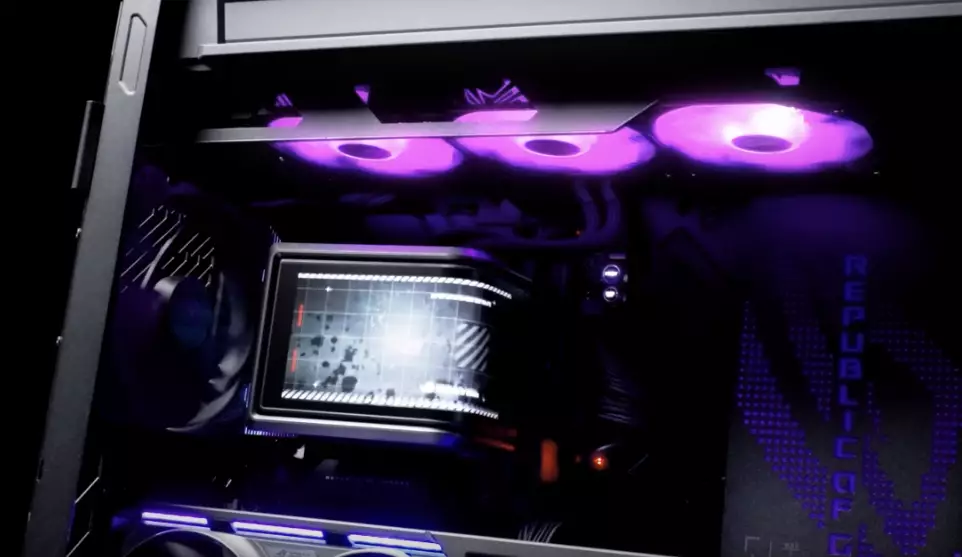
The landscape of CPU cooling has long been dominated by functional, utilitarian designs focused solely on thermal management. However, the introduction of the ASUS ROG Ryuo IV series marks a radical departure from the norm. This awe-inspiring water cooler doesn’t just aim to keep your CPU cool; it seeks to transform the very visual experience of PC building and maintenance. With its eye-catching curved OLED display capable of showcasing 3D-effect visuals and real-time system metrics, this cooler boldly blends aesthetics with utility. It’s a testament to how high-performance hardware is increasingly becoming a canvas for personal expression and technological artistry.
What sets the Ryuo IV apart is its movable, curved 6.67-inch AMOLED screen. Unlike traditional static displays, this screen offers dynamic visuals—ranging from custom system info overlays to mesmerizing 3D-effect videos. The idea of a display that can be physically shifted adds a level of interactivity and personalization rarely seen in PC hardware. Not only does this enhance the visual appeal—turning an otherwise mundane cooling component into a centerpiece—but it also exemplifies the trend of integrating entertainment and information seamlessly into core components.
Beyond Aesthetics: Performance and Design Innovation
Of course, a high-quality cooling system must excel in more than just its visual features. ASUS’s ROG Ryuo IV delivers on this front with a robust pump designed for superior flow, lower impedance, and elevated cooling performance. Compatibility with major CPU sockets such as LGA 1851, 1700, and AMD’s AM5 and AM4 ensures it caters to a wide audience of enthusiasts and professionals alike. The radiator, measuring nearly 40 centimeters in length, paired with three 120mm ARGB fans, guarantees high airflow and static pressure, crucial for keeping high-performance CPUs in check.
Moreover, ASUS’s commitment to designing a quiet operation—capping noise levels around 39.6 dB(A)—demonstrates a focus on user comfort. The inclusion of software support for hardware monitoring bridges the gap between aesthetics and functionality, allowing users to customize screen content, track system health, and experience their build in a more engaging way. The dual-color options, including a sleek white version, cater to diverse aesthetic preferences, emphasizing that this is a product designed for those who want their PC hardware to stand out both visually and performance-wise.
The 3D Effect and Movability: A New Standard in Showmanship
What truly differentiates the Ryuo IV is its focus on visual innovation. The claim of a “3D-effect” is provocative, though it’s not the holographic or lenticular 3D seen elsewhere. Instead, it leverages visual tricks—such as framing, perspective, and subtle motion blur—to create an illusion of depth. When paired with custom videos or system overlays, this effect enhances the overall aesthetic, making the cooler more than just a functional component; it becomes a display of personal flair and technological artistry.
Furthermore, the movable nature of the OLED screen breaks away from static design conventions. Thanks to its slider mechanism, users can reposition the display to suit their preferences or to better showcase their build inside a case. This level of customization and interactivity signifies a shift toward more dynamic hardware, where components are not just fixed units but adaptable interfaces that reflect the owner’s personality.
Is This the Future of PC Building?
The ASUS ROG Ryuo IV symbolizes a bold step toward intertwining visual sophistication with core performance. It challenges the traditional boundaries of PC cooling, turning what was once purely functional into an extension of personal taste and creative expression. For enthusiasts willing to invest, it offers an unprecedented level of customization, prestige, and tech-savvy flair.
However, the hefty price tag—even in the UK, where it’s priced at around £322—raises questions about value and accessibility. While the cooler’s features are undeniably impressive, they cater to a niche audience that demands the intersection of gaming, aesthetics, and innovation. This product exemplifies a future where hardware design is as much about style as it is about function. Whether or not this trend will become mainstream remains to be seen, but one thing’s certain: the era of purely utilitarian cooling solutions is fading, replaced by a new wave of expressive, interactive, and visually stunning innovations that could redefine how we perceive and showcase high-performance PCs.
Leave a Reply