
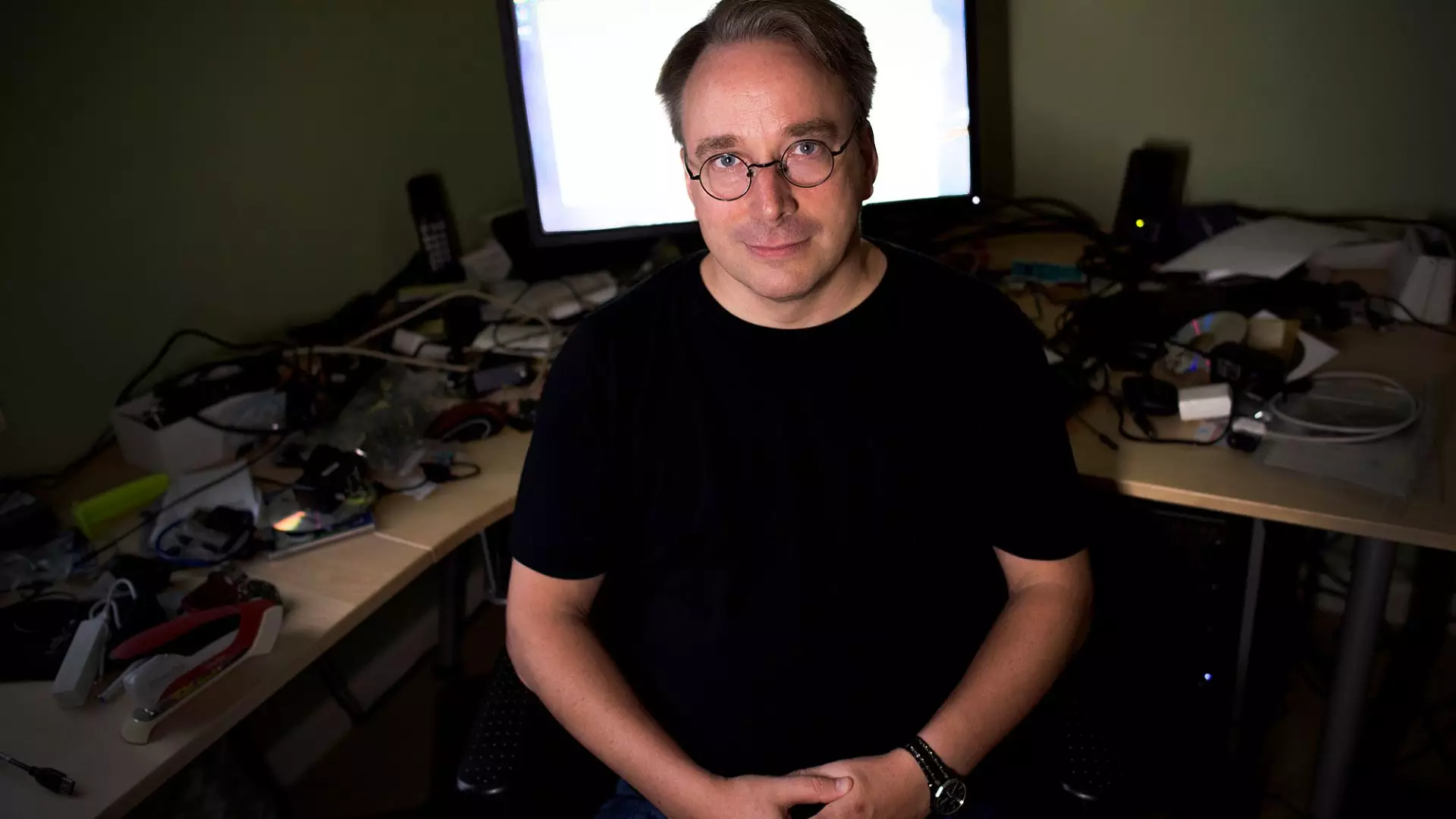
In a world obsessed with the latest and greatest in PC hardware, it’s easy to forget that sometimes, longevity and stability can outshine cutting-edge technology. The recent revelation that Linus Torvalds still relies on an AMD Radeon RX 580 — a GPU launched back in 2017 — challenges the prevailing narrative that newer is necessarily better. Instead, it prompts a deeper reflection on the intrinsic value of established hardware and what it says about the market’s obsession with constant upgrades. The RX 580, with its solid performance and open-source driver support, exemplifies how a mature component can still serve as a reliable workhorse, especially in niche areas like Linux development.
The PC enthusiast community often equates newer hardware with better performance, higher efficiency, and future-proofing. However, the case of Torvalds demonstrates that the practical needs of many users, particularly developers and hobbyists, are different. For these users, stability, compatibility, and cost-efficiency outweigh raw power. The RX 580 provides ample performance for productivity tasks, coding, and even light gaming — all while maintaining an open-source driver ecosystem that Linux users cherish. It’s a reminder that hardware designed several years ago can still perform gracefully in a usage scenario that doesn’t demand bleeding-edge specs.
Misconceptions About Hardware Obsolescence and Technological Progress
The rapid cadence of hardware releases has fostered a misconception that older components are obsolete—destined for the dustbin of history as soon as new models emerge. Yet, reality debunks this myth. The RX 580, built on AMD’s 14nm Polaris architecture, still performs adequately even with today’s demanding workloads. When it launched, it was praised for its feature set, including 8GB of GDDR5 memory and good support for DirectX 12, proving its capability in the mainstream market. Despite being almost six years old, it remains relevant, especially in specialized environments where stability and open-source support are prioritized.
Furthermore, the launch of Nvidia’s RTX 5050 and similar newer models has not rendered the RX 580 irrelevant. In fact, the differences in architecture, shader counts, cache sizes, and power consumption highlight that hardware progress isn’t linear or singularly about raw specs. The newer GPUs feature RT cores, tensor units, and larger cache hierarchies, enhancing performance in modern gaming and professional workloads. Yet, these advancements come at a cost, both monetary and in terms of energy efficiency. The RX 580’s continued relevance underscores that stability, cost-effectiveness, and specific use-case suitability often outweigh marginal gains in performance.
The Myth of Future-Proofing and the Wisdom of Staying the Course
When contemplating hardware upgrades, many users fall prey to the notion that newer technology guarantees longevity and future-proofing. However, high-performance gaming or professional work often reveals that “future-proof” is a marketing term rather than an actual guarantee. Torvalds’ setup, which combines an older GPU with a powerful 5K monitor and a high-end CPU, exemplifies this mindset. His choice hints at prioritizing reliability, compatibility, and personal comfort over the pursuit of the latest specifications.
True stability often comes from sticking with hardware that has proven its worth over time. The RX 580’s longevity speaks to the importance of hardware that isn’t just cutting-edge but is also well-understood, thoroughly tested, and supported by open-source community efforts. For Linux users, this compatibility is crucial; proprietary drivers often complicate upgrades or introduce instability. In this light, the RX 580 serves as a testament to the idea that “if it isn’t broken, don’t fix it” applies just as well to GPUs as it does to software.
Above all, it invites us to reassess how we value technology: not merely on the basis of how new it is, but on how well it serves our needs. In a universe where impatience for progress often overshadows pragmatism, the RX 580 reminds us that sometimes, the best choice is to let good hardware age gracefully, leveraging its maturity rather than replacing it prematurely.
Leave a Reply