
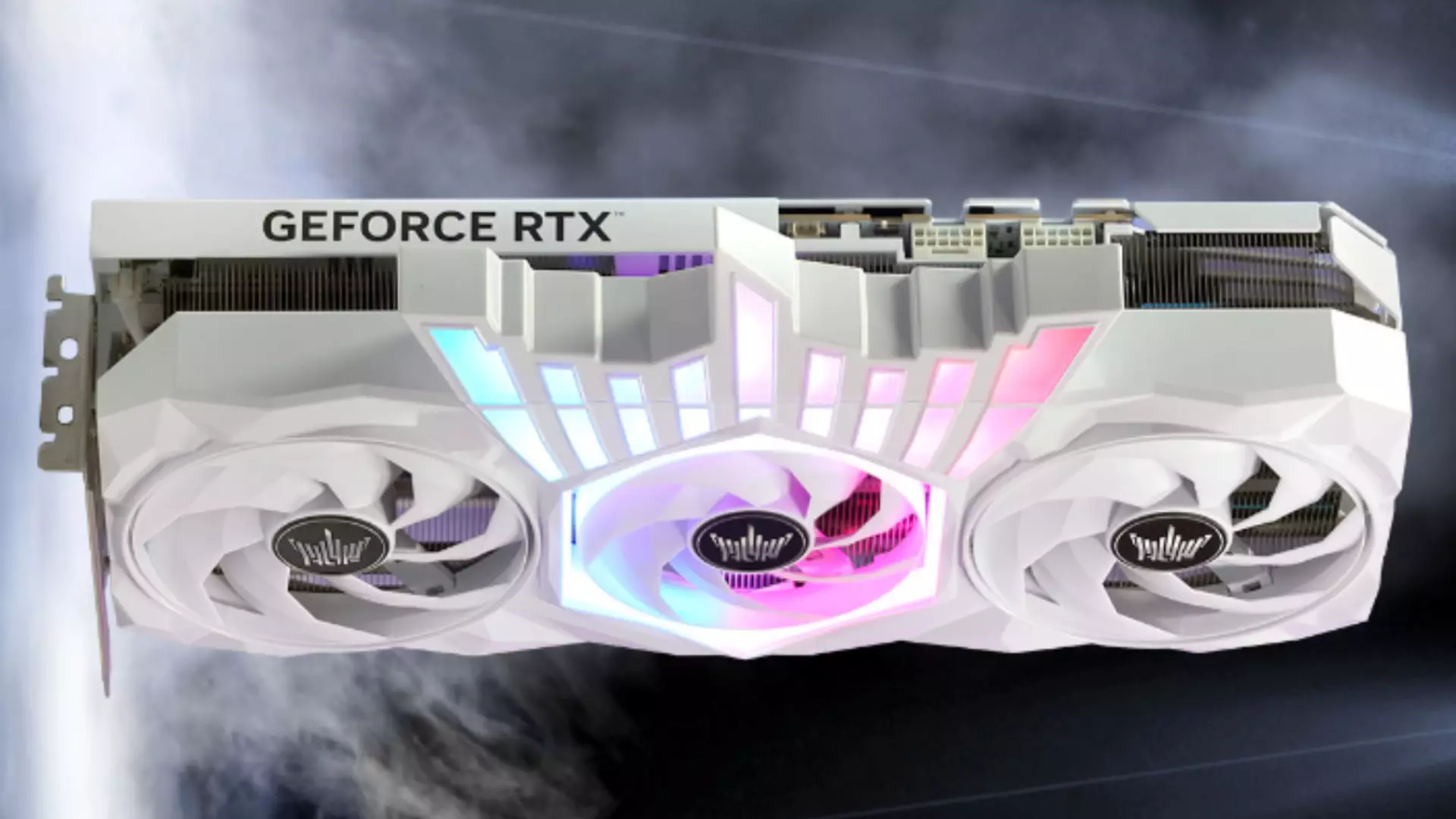
The Galax RTX 5090 D HOF XOC Edition embodies a daring leap into the future of high-performance graphics hardware. Not merely a GPU, but a testament to what enthusiasts can push hardware to achieve, this card is designed for those who refuse to accept limitations and seek to redefine the boundaries of digital performance. Its existence underscores the relentless human desire to dominate technological frontiers—placing raw power and overclocking potential over mainstream consumer considerations. Unlike conventional graphics cards locked to conservative power thresholds, this model pushes the envelope into uncharted territory, turning raw wattage into a badge of honor rather than a liability.
Design and Engineering for Overclocking Supremacy
Visually, the RTX 5090 D HOF XOC is a spectacle. Its bold, crown-like shroud design is more than aesthetic; it visually signifies the card’s supremacy in the overclocking community. Beneath this dramatic exterior lies a meticulously crafted PCB—a 12-layer masterpiece engineered to withstand extraordinary power loads. With a 38-phase power delivery system and dual 16-pin 12V-2×6 connectors, the hardware setup signals an unwavering commitment to stability and overclocking endurance. These engineering choices are not arbitrary; they are deliberate decisions to facilitate pushing the GPU far beyond factory settings without risking catastrophic failure. For overclockers, this is tantamount to launching into space—the hardware must survive the vacuum of extreme wattage and temperature fluctuations.
The Race to Max Power: Myth or Reality?
One of the most astonishing aspects of this GPU isn’t just its design but the rumors circulating about its BIOS capabilities. Allegedly, a BIOS exists that pushes the power ceiling to a staggering 2,001 W—a figure that’s almost surreal and seemingly impractical for everyday use. To contextualize this, the standard RTX 5090 already has an impressive 575 W TDP, which itself is a colossal figure for consumer-grade hardware. Yet, this overclocking BIOS claims to embrace nearly four times that limit. Realistically, hardware consumption constraints still activate, capping actual power draw around 1,000 W—a figure still enough to blow most PC power supplies out of the water. But the existence of such a BIOS reveals ambitions rooted deep in overclocking legend, where the goal is to stretch hardware to its near-physical limits.
Record Breaking and the Overclocker Subculture
Innovative overclockers like Team OGS have already experimented with these extreme BIOSes, achieving clock speeds of 3,650 MHz—an increase of over 1,200 MHz from stock—that push the boundaries of what is technically possible. Achieving such speeds with liquid nitrogen cooling transforms the GPU into a weapon of unprecedented performance, breaking records in benchmarks like 3DMark’s Port Royal. While pounding high scores—such as a 47,469 and later a 47,598—are impressive pseudorecords, what truly matters is the mindset. These are pioneers, wielding secretive BIOSes, custom cooling solutions, and raw technical expertise to achieve feats that most users would find unimaginable.
The Elusive Nature of Ultra-High-Power BIOSes
However, access to these BIOSes remains tightly controlled, kept within the clandestine circles of elite overclocking communities. Their transfer is more akin to a covert exchange—cryptic, guarded, and often concealed in nondescript packages or podcasts, fearing regulatory scrutiny or hardware bans. For the average enthusiast, the allure is undeniable but practically unattainable. It’s a fascinating contrast: a hardware marvel that teeters on the edge of insanity, driven by a small niche of fearless innovators willing to gamble their hardware and warranties. For the rest of us, it’s a stark reminder of how extreme the pursuit of performance can become—located miles away from typical gaming or professional workflows.
The Future of Overclocking and Its Implications
This entire spectacle presents an intriguing question: how far can overclocking go before it ceases to be practical and veers into pure science experiment territory? The Galax RTX 5090 D HOF XOC Edition exemplifies the zenith of this pursuit. While mainstream consumers may never need nor want such power, the drive behind these projects inspires manufacturers and enthusiasts alike to explore better cooling solutions, new PCB architectures, and smarter power management. It pushes the industry to innovate—making even stock hardware more capable, and perhaps, someday, making the limits of what’s possible accessible to broader audiences. But until then, this card remains a monument to what human ingenuity and obsession can achieve—an overclocking legend in the making, whispering secrets into the ears of the brave few daring to push the limits.
Leave a Reply