
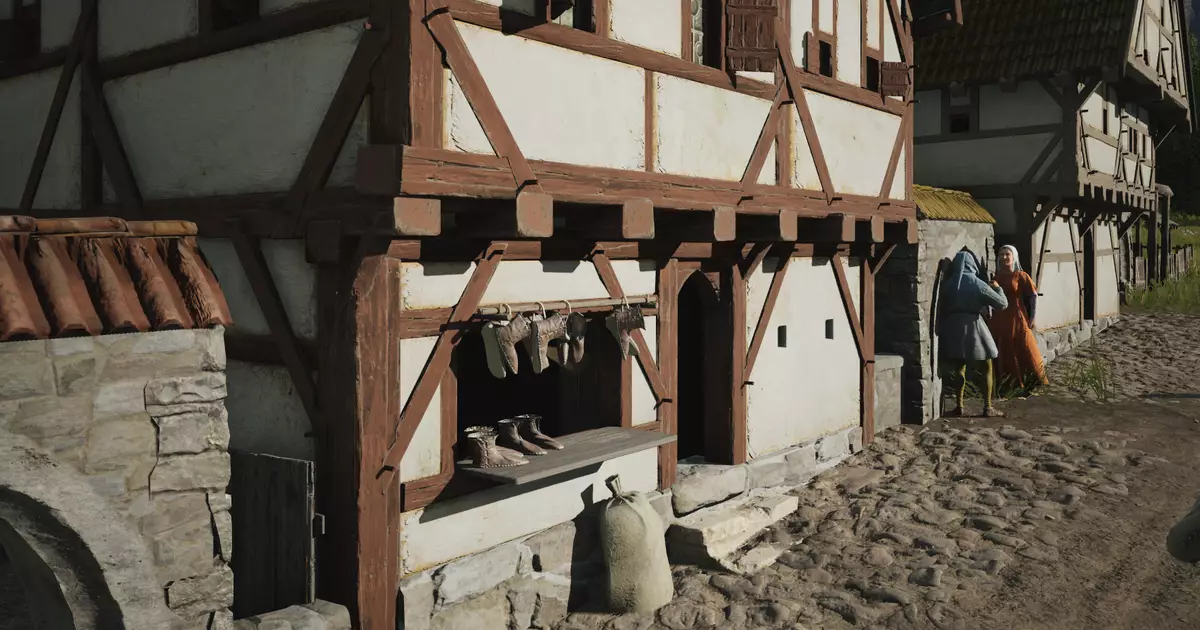
Manor Lords stands out among city-building games for its ambitious vision of recreating late 14th-century Franconia with remarkable historical fidelity. Unlike many contemporary simulators that favor sleek interfaces and streamlined mechanics, Manor Lords immerses players in a gritty, often unpolished tapestry of medieval life. Its developers, Slavic Magic, have committed to this vision by undertaking a sweeping, comprehensive overhaul rather than spamming the community with incremental patches. This decision, while frustrating on the surface, is rooted in a desire to craft a more authentic and engaging experience—one that doesn’t succumb to the temptation of superficial fixes but instead redefines core gameplay mechanics.
The Challenge of Balancing Ambition and Practicality
The delay in updates can be discouraging for fans eager for fresh content, but it reveals a philosophical stance on game development. By tackling major systemic changes all at once, Slavic Magic aims to establish a more stable, expandable foundation. The core change—an extensive rework of building interactions, production chains, and environmental mechanics—aims to overhaul the game’s very DNA. Such large-scale revisions are risky; there’s a potential for bugs, imbalance, or unintended consequences that could disrupt the overall experience. Yet, the developers seem confident that a thorough rework, though time-consuming and resource-intensive, will ultimately serve players better.
Rethinking Spatial and Environmental Relationships
One of the most intriguing updates concerns how buildings relate to each other and their environment. The previous approach experimented with radius-based effects, which quickly proved cumbersome and mismatched with Manor Lords’ architectural layout. Instead, Slavic Magic is shifting toward environment affinity systems—associating buildings with specific terrain types like Meadow, Woodland, Farmland, Rural, and Urban areas. This approach provides richer strategic depth and encourages players to think critically about placement, fostering a more organic, player-driven development process.
The removal of geometric constraints (rectangular plots versus circular influence zones) is a bold move, reflecting a desire to preserve aesthetic integrity and gameplay creativity. It’s a move away from rigid, formulaic city planning towards a more natural, immersive experience that mirrors the complex relationships of medieval settlements. Such reworking promises to elevate the game’s depth, requiring players to consider environmental harmony alongside production efficiency.
Enhancing the Medieval Ecosystem: New Features and Mechanics
The upcoming updates don’t stop at environmental affinities. Slavic Magic is introducing a range of new features designed to deepen the simulation. A major highlight is the addition of a relational system between buildings, which can now influence each other more dynamically. For example, apiaries will benefit from proximity to woodland, boosting pollination and crop yields. Urban planning, too, becomes more nuanced as new house types can be placed to increase urban affinity, creating a lively, interconnected community.
Additionally, the introduction of diverse map types like “Divided” with its central mountain range invites players to adapt and strategize within new geographical constraints. The environment becomes not just scenery but an interactive element shaping the flow of resources and population growth. This push for environmental storytelling reflects the game’s core philosophy: to simulate medieval life with rich, interconnected systems rather than static, straightforward mechanics.
The Future of Manor Lords: A Cautiously Optimistic Outlook
While the current development process might seem slow—delayed by the sheer scale of re-engineering—it signals a commitment to quality and authenticity. Once the overhaul is complete, and smaller, more frequent updates commence, Manor Lords could elevate the city builder genre to an entirely new level of depth and fidelity. The developers’ transparency about these changes demonstrates their dedication not just to the game but to genuine simulation.
Ultimately, Manor Lords’ future hinges on how well Slavic Magic balances complexity with enjoyability. The game has already demonstrated its potential to transport players into a richly textured medieval world, and this rework promises to expand that potential exponentially. For fans willing to be patient, the reward will be a game that captures the tangled beauty of feudal society more faithfully than ever before—an ecosystem of buildings, environment, and human ambition working in harmonious chaos. It’s an exciting, if bumpy, journey toward a truly immersive medieval simulation.
Leave a Reply