
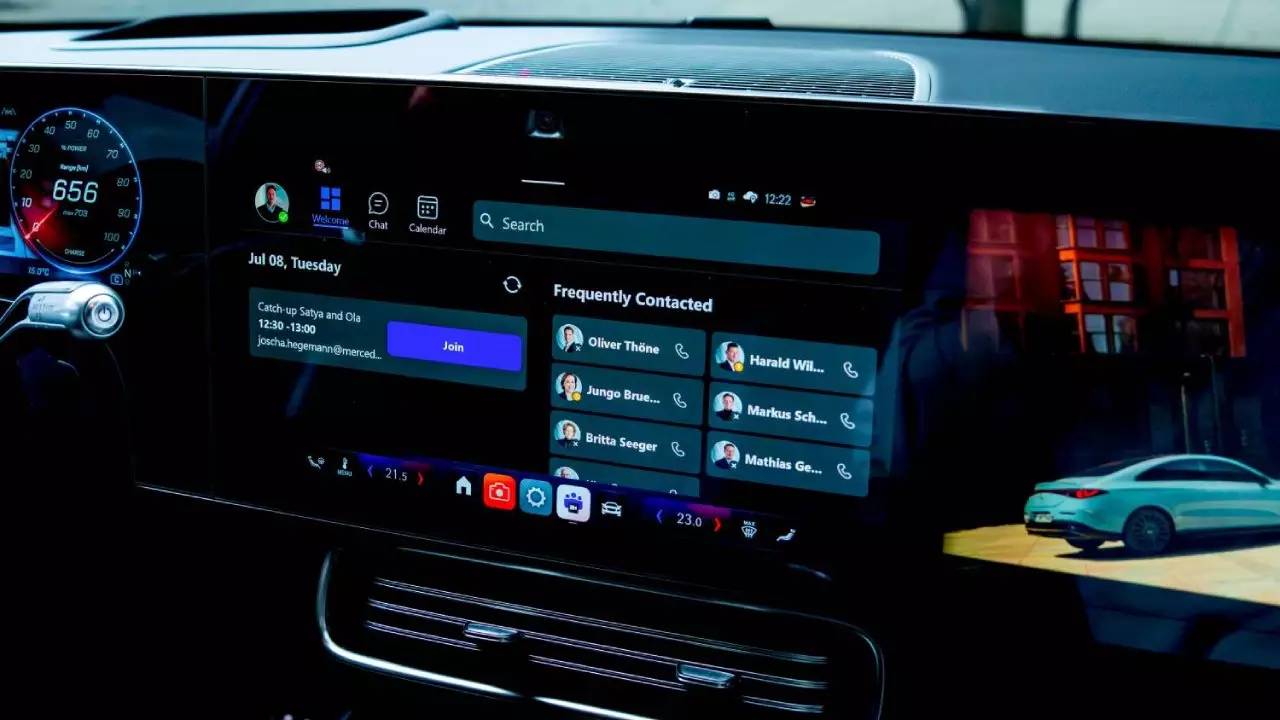
Mercedes-Benz’s latest technological leap aims to blur the lines between work and leisure by enabling live video streaming from inside the car. The innovation allows drivers to broadcast their in-car presence during meetings on Microsoft Teams, presenting a futuristic yet controversial take on productivity. While the manufacturer touts this as a convenience designed to keep professionals connected on the move, skeptics rightfully question whether safety is sacrificed to chase the allure of technological advancements. As automotive technology becomes increasingly integrated with digital ecosystems, the core question remains: should driving remain a domain of focus and vigilance, or is this new feature risking distraction under the veneer of innovation?
The concept of a vehicle becoming a second office is nothing new; however, permitting live video feeds from the driver’s seat raises alarms about safety and practicality. Mercedes emphasizes that the system automatically disables video when the vehicle is moving, thus theoretically enforcing safe driving practices. Yet, this safety mechanism is easily circumvented by curious or distracted drivers, or even in rare cases, by malicious app manipulation. The potential for mishaps increases proportionally with the complexity of such features, especially when real-world scenarios often defy their designed safeguards. This update, while marketed as a progressive enhancement, may inadvertently fuel risky behaviors that undermines the very safety Mercedes claims to prioritize.
Technological Vanity or Genuine Utility?
The question of utility is at the heart of this push toward integrating video into the driving experience. On the surface, features like “Next Meetings” and quick access to contacts promise productivity in transit. The expanded chat functions and voice-controlled calendar integration aim to streamline workflows. Yet, these enhancements seem superficial when juxtaposed with the core question: what value does live video streaming truly add during a drive? Is it a sign of innovative leadership or a display of technological hubris—an attempt to show off capabilities without thorough consideration of real-world implications?
In reality, the primary benefit appears to be managerial flex—demonstrating that even while en route, executives can project a constant image of busyness and commitment. It’s a form of technological vanity, a way for affluent professionals to showcase their ‘hustle’ without actually being stationary. But this spectacle comes with ominous risks. Moving vehicles demand undivided attention, and the introduction of a live video feed could lead to momentary lapses in focus. The very justification that the driver won’t see shared screens or slides seems insufficient when the baseline expectation is that they shouldn’t be distracted at all. If the intent is safety, why push features that introduce new potential distractions?
AI in the Driver’s Seat—A Double-Edged Sword
Mercedes’s integration of generative AI via Microsoft 365 Copilot marks an ambitious step into AI-powered assistance. Drivers will be able to use voice prompts to prepare for meetings, retrieve information, and manage tasks, all while driving. Proponents argue that AI can enhance safety by reducing cognitive load, enabling drivers to handle complex tasks hands-free. Critics, however, warn that AI tools are not infallible. Errors in data retrieval, misunderstandings, or overconfidence in automation may lead to situations where drivers rely too heavily on AI guidance, diverting their attention from the road.
This convergence of smart systems in vehicles presents a paradox: the promise of ultimate convenience versus the peril of over-reliance on imperfect technology. The experience may be seamless in theory, but when critical decisions hinge on AI accuracy, the margin for error—be it misinterpreted emails or misunderstood instructions—becomes uncomfortably significant. This technological arms race reflects a broader societal trend where every aspect of life is being miniaturized, automated, and optimized, often at the expense of safety margins that have historically kept drivers out of harm’s way.
Final Thoughts: Innovation that Demands Responsibility
Mercedes’s latest update exemplifies the dual-edged nature of modern automotive innovation. Pushing the boundaries of connectivity and AI integration can transform the driving experience, but it also forces us to confront uncomfortable questions about priorities. Are corporations truly aiming to enhance safety and productivity, or are they chasing headlines and technological prestige? Given the risks associated with distraction and over-reliance on automation, it is crucial for both manufacturers and consumers to approach such innovations with critical scrutiny.
The automotive industry is at a crossroads—balancing the seductive promise of cutting-edge features with the irrefutable need for safety. Mercedes’s bold steps may be applauded for their ingenuity, but they also serve as cautionary tales. As driver assistance systems grow more complex, so too must our standards for safety and responsibility. Without a careful, ethical approach, technological progress risks turning into a reckless gamble—a hazard disguised as a leap forward.
Leave a Reply