
The recent arrival of Civ 7’s version 1.2.4 marks a pivotal evolution in the game’s development philosophy. Rather than simply iterating on superficial elements, Firaxis has embarked on a substantial overhaul of the user interface (UI), signaling a long-term commitment to improving player experience. This shift, however, has not come without turbulence. The transition to a new UI system fundamentally altered how the game loads and manages interface files, leading to widespread mod incompatibilities. This situation underscores a critical dilemma in game development: balancing innovation with stability.
From a critical standpoint, Firaxis’s decision to rework the UI architecture exposes a broader issue in maintaining backward compatibility amidst rapid development. While the foundation laid by this overhaul promises future improvements, it also highlights the risks of introducing disruptive changes, particularly when the modding community relies heavily on stable interfaces. The developers’ acknowledgment of the turmoil and the option to revert to previous game versions via Steam indicates a recognition of this tension. Yet, it’s essential to question whether the benefits of such deep technical updates justify the short-term chaos they cause among dedicated players and mod creators.
Moreover, Firaxis’s transparency about the “rougher than most” update process demonstrates a commendable willingness to communicate complexity. Still, it raises concerns about pacing—should such significant backend changes be scheduled at moments when the community is already reeling from others? The long buffer needed for mod developers to adapt underscores how core gameplay experiences can be inadvertently compromised, especially for those who prefer customized or challenge-modified versions of the game.
Balancing Power: Changes to Wonders and Strategic Structures
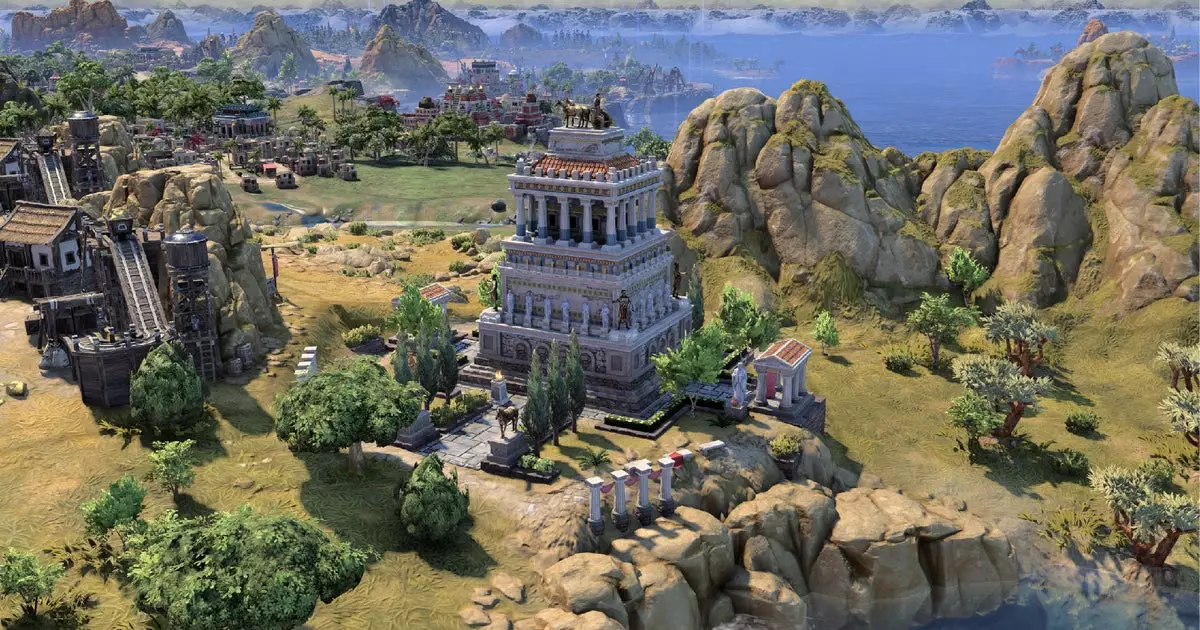
Beyond the backend, the update significantly recalibrates the game’s power balance through targeted tweaks to wonders and district placements. Wonders like Erdene Zuu can now be constructed earlier, reflecting a deliberate shift to diversify strategic pathways. The repositioning of the Colossus and Monks Mound into different civic branches suggests Firaxis’s intent to prevent certain wonders from becoming oversaturated, thus fostering more nuanced gameplay.
However, the nerfs to iconic structures like the Gate of All Nations and House of Wisdom reveal a strategic attempt to prevent ancient empires from overshadowing later civilizations’ advancements. This approach signifies a conscious move towards leveling the playing field, demanding players to adapt their strategies rather than rely solely on overpowered wonders for victory. Conversely, the buffs to structures like Petra and the Eiffel Tower imply a desire to maintain diversity in cultural victory routes, promoting a broader spectrum of viable strategies.
Critical analysis reveals that these adjustments serve as an ongoing tug-of-war between innovation and tradition. They challenge players to rethink their early-game tactics, potentially rewarding those who can effectively leverage the revised wonder landscape. Yet, such balancing acts can also frustrate players who had already optimized their approaches around previous configurations, indicating that in the pursuit of fairness, some legacy strategies are inevitably sacrificed.
AI Enhancements and the Path Forward
Firaxis’s attention to AI behavior demonstrates an understanding that game difficulty and realism are vital to the overall experience. By tweaking AI decision-making to prevent illogical move acceptance or overly simplistic alliances, the developers aim to craft a more believable and challenging adversary. This development reflects a step towards refining the strategic depth, nudging AI opponents closer to human unpredictability.
However, it raises questions about whether these incremental improvements will suffice. The AI’s “fewer weird moves” indicates progress, yet the ongoing need for adjustments suggests underlying issues with the AI’s core strategic programming. Is Firaxis genuinely capable of creating AI opponents who can match skilled human players across all stages of the game? Or will iterative tweaks only serve as temporary band-aids on a more profound challenge of creating adaptive, intuitive AI?
The continual interface enhancements further hint at an overarching ambition: to craft a smoother, more intuitive experience. Improved UI responsiveness and usability are vital, particularly in a complex strategy game where information overload can obfuscate decision-making. Yet, these improvements must accompany meaningful gameplay adjustments; otherwise, they risk becoming cosmetic rather than transformative.
The 1.2.4 update embodies a bold step toward refining Civ 7’s strategic depth and player experience. While the foundation for future innovations appears promising, the current implementation reveals inherent tensions between progress and stability. This delicate balance will determine whether Civ 7 continues to captivate a dedicated audience or risks alienating its most passionate fans through reckless change. Only time will tell if Firaxis can wield these substantial updates to elevate the game to its true potential—if they manage to maintain that delicate equilibrium between innovation and reliability.
Leave a Reply