
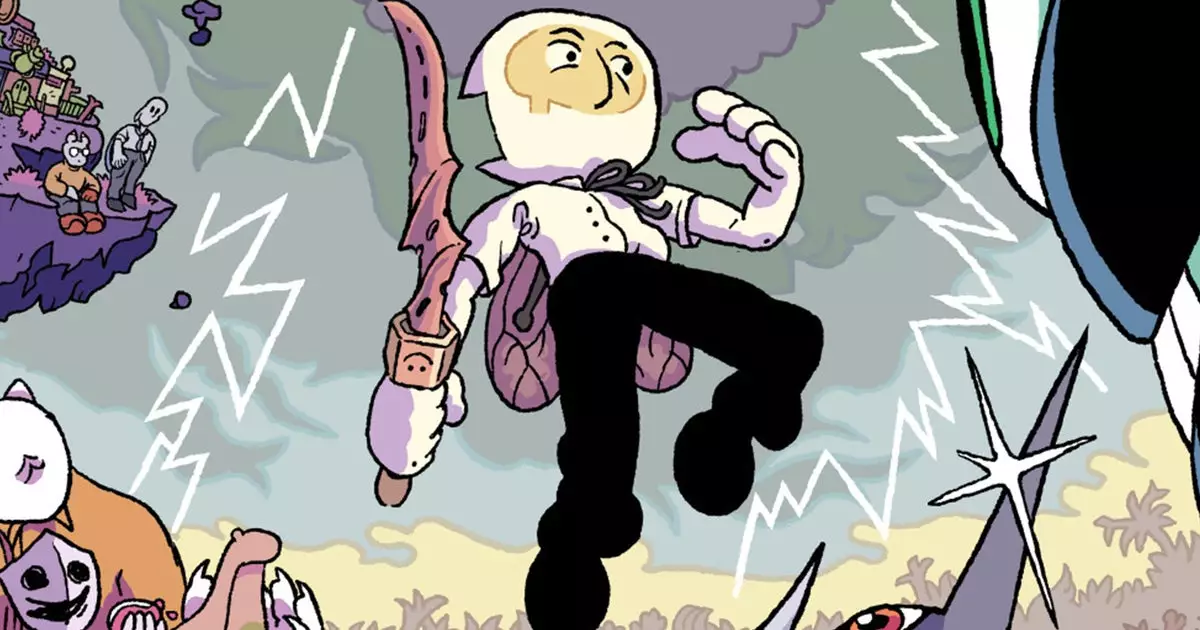
In a gaming landscape saturated with familiar conventions, Blanksword emerges as a daring anomaly—a game that boldly fuses two genres often perceived as incompatible: roguelike and role-playing game (RPG). Unlike many titles that struggle to unify these elements seamlessly, Blanksword offers an intriguing exploration into how these mechanics can intersect creatively and meaningfully. Its premise defies expectations by placing players in the shoes of a brainless angel, grappling with amnesia amidst a world governed by metaphysical beings. This narrative complexity, combined with its genre-defying gameplay, signals a game that refuses to be pigeonholed, instead opting to redefine what a hybrid RPG can achieve.
The game’s core concept is strikingly original: an angel, violently disoriented, embarks on a quest across fragmented islands ruled by a divine entity known as “Literally God.” The protagonist, simply called Blank, operates without his memory—a narrative choice that not only fuels mystery but also influences gameplay mechanics. This inversion of identity allows for inventive mechanics, such as acquiring and installing different “Angel Brain Parts,” which grant abilities inspired by everyday human traits or absurd humor. The potential of this mechanic lies in its flexibility, enabling players to customize their styles and strategies dynamically—an element that adds depth and replayability.
Encountering Familiarity Through Unique Art and Design
Visually, Blanksword draws heavily from the indie RPGs and surrealist titles that have carved out a niche audience in recent years. Its aesthetic echoes the likes of Hylics and Felvidek—titles celebrated for their eccentric visuals and bold artistic choices. The game’s involvement with Mortis Ghost, creator of OFF, elevates these aspirations, promising a colorful, abstract universe that skews away from conventional fantasy tropes. With Ghost’s artistic influence, Blanksword’s world appears less grounded in realism and more in surreal symbolism, inviting players into a universe rife with visual metaphors and hauntingly beautiful design.
This aesthetic choice complements the game’s narrative themes: a fragmented mind, divine absurdity, and existential questioning. The integration of a striking, intentionally strange art style becomes a narrative device that immerses players in a universe where the bizarre and the profound collide. It signals that the game isn’t just about mechanics but a visceral visual experience—one that challenges players to interpret its symbolism and engage emotionally with its unconventional worldbuilding.
Deep Mechanics and Player Agency: Balancing Strategy and Randomization
Blanksword’s gameplay mechanics elevate it beyond a mere conceptual curiosity. Its turn-based combat system offers a strategic challenge, wherein players collect an expansive array of moves—”hundreds” are hinted at—each differing from run to run. This procedural element ensures that no two playthroughs are identical, fostering a sense of discovery and mastery. The dynamic acquisition of skills and equipment means players must adapt on the fly, making each decision impactful.
The highlight, however, is the “brain parts” mechanic—an inventive tribute to the game’s central theme of identity and memory loss. These parts not only restore skills but influence how players approach encounters, adding a layer of personalization and tactical diversity. Choosing which abilities to equip from a limited pool introduces constant decision paralysis, compelling players to weigh their options carefully. This mechanic also injects a roguelike flavor that challenges players to optimize their builds within the constraints of randomness—a true test of strategic adaptability.
Furthermore, the game’s narrative depth is intertwined with its mechanics. The idea of collecting and upgrading parts of a shattered mind lends itself to storytelling about memory, consciousness, and identity. As players integrate different angelic memories, they essentially sculpt their version of Blank, adding a bespoke layer of character development that’s rarely seen in hybrid RPGs.
A Promising Future Shaped by Community and Ambition
While Blanksword has yet to secure full funding, its presence on Kickstarter and the availability of a playable demo signal earnest progress. The game’s early design hints at a passionate development team willing to challenge genre conventions and deliver a distinctive experience. The fact that the project features a figure connected to the cult classic OFF—both in art and design philosophy—adds credibility and intrigue, positioning it as a game for a niche but devoted audience seeking something fresh.
However, success is not guaranteed. The indie scene is fraught with risks, and genre blending can be polarizing. Yet, Blanksword’s identity as an “indie RPG” with “one of those” vibes suggests it’s targeting a dedicated niche that appreciates outsider art, surreal storytelling, and innovative mechanics. Its estimated 2027 release window provides plenty of room for polish and community building, essential for fostering a passionate fanbase.
Ultimately, whether Blanksword becomes a cult favorite or fades away depends on its ability to deliver on its ambitious promises. But with its compelling premise, inventive gameplay, and artistic vision, it’s poised to carve out a unique space in the indie gaming landscape—one that could redefine how genres are combined and experienced.
Leave a Reply