
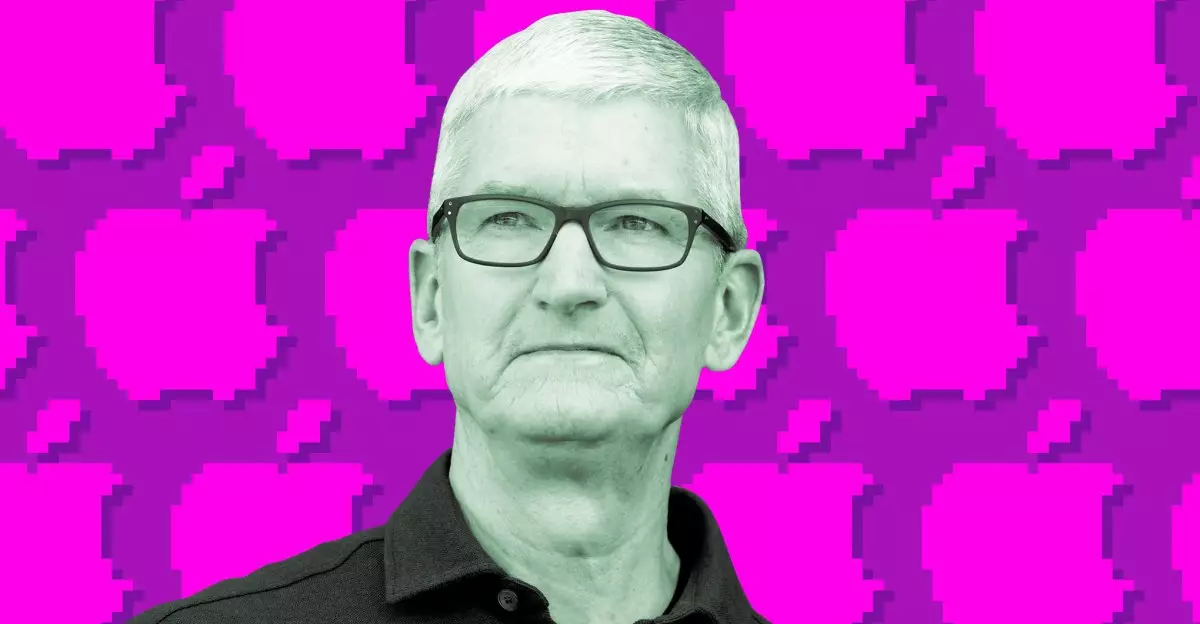
Apple’s recent all-hands meeting, led by CEO Tim Cook, signals a pivotal shift in the company’s approach to artificial intelligence. Historically hesitant and methodical, Apple has initiated an open dialogue about AI’s transformative power, framing it as a revolution comparable to the advent of smartphones or the internet. This declaration is an audacious move that reveals Apple’s recognition of AI as not just a technological upgrade but a fundamental paradigm shift. Cook’s rhetoric—asserting that “AI must be ours to grab”—embodies a sense of urgency and determination. Such leadership into uncharted territory underlines the importance of AI as a strategic priority, even when the company’s track record in early adoption and innovation has been cautious.
This moment also exposes a certain internal tension. Apple’s leadership seems aware of its history of late entries in disruptive markets, yet now emphasizes the need to lead and “own” AI’s future. This perspective prompts scrutiny: can Apple truly replicate its success stories in AI, a domain riddled with rapid innovation and fierce competition? The company’s cautious pace so far suggests a prudent approach, but the high-stakes race leaves little room for hesitation. The leadership’s confident rhetoric masks underlying uncertainty—particularly as Apple grapples with the rapid evolution of AI technology and the challenge of maintaining its signature quality.
The Challenges Behind Apple’s AI Ambitions
Despite the hype, Apple’s AI journey has been fraught with setbacks. The delay of a planned AI-enhanced Siri and the company’s hesitance to fully integrate large language models (LLMs) reflect a cautious, if not somewhat sluggish, trajectory. Apple’s initial hybrid approach—balancing traditional systems with LLMs—proved insufficient for the company’s high standards. The decision to overhaul this architecture signifies a recognition that conventional methods are inadequate for meeting Apple’s quality benchmarks.
Furthermore, Apple is losing talent to competitors like Meta, which aggressively recruit AI specialists. This brain drain underscores the fierce competition for top AI talent and raises questions about Apple’s ability to keep pace. Having been a laggard in the AI arms race, the company now faces the uphill task of building a robust team capable of executing its bold vision. The challenge lies not only in technical innovation but also in fostering a culture that values rapid experimentation without compromising the meticulous standards Apple is known for.
Can Apple Successfully Transform Its AI Destiny?
Apple’s strategy appears to be to double down on investment and steer its AI efforts toward core products and services, aiming to deliver excellence rather than just innovation for innovation’s sake. While this pragmatic approach might preserve the company’s reputation for quality, it risks smothering the speed needed to stay competitive in a rapidly evolving field. Tim Cook’s bullish statements suggest an optimistic bias, but in the world of AI, optimism must be matched with agility.
Ultimately, Apple’s success in AI will depend on whether it can reconcile its tradition of meticulous craftsmanship with the urgent need for innovation. The company’s willingness to publicly embrace AI as a transformative force signals an awareness that resting on past laurels is no longer sufficient. The next phase will test whether Apple’s resources, talent, and corporate culture can align to realize its ambitious vision without losing the essence of what makes the brand unique. Only then can the AI revolution truly belong to Apple, or will it be another episode of the company playing catch-up?
Leave a Reply