
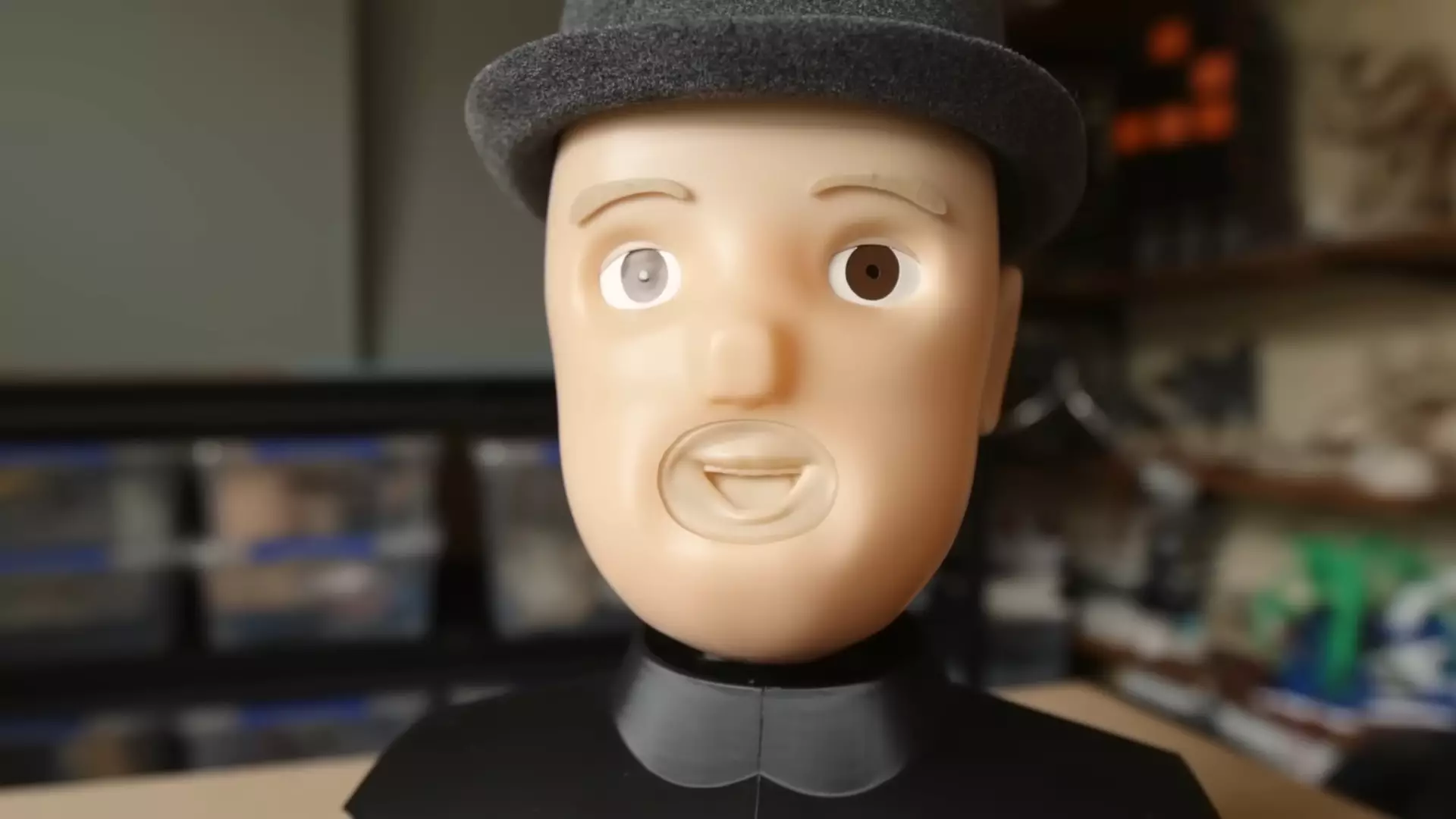
In a world increasingly dominated by technological marvels, the line between fascination and revulsion grows thinner with each new innovation. The recent creation by YouTuber Ancient exemplifies this tumultuous boundary—an experiment in robot lip-syncing that veers sharply into the unsettling. While technically impressive, the project’s eerie execution amplifies the uncomfortable sensation that we are witnessing a step too far in our relentless pursuit of automation and artificial expression. It’s not simply a case of creative ingenuity gone awry; it’s a stark reminder of how human designs can evoke primal unease when they stray from genuine human familiarity.
This robotic contraption, primarily composed of a 3D-printed sphere of different mouth shapes spun within a doll’s head, embodies a paradox. While the engineering behind it is commendable—precise control via stepper motors managed by a Raspberry Pi—the resulting visual impression is haunting. The mouths’ assortment of expressions, combined with the head’s various mechanical motions, creates a visage that seems just on the edge of life and death. The absence of human-like eyes or facial cues results in a visage that is not quite machine, yet not quite alive—an eldritch artifact of modern technology that teeters on the brink of the uncanny valley.
A Disquieting Spectacle: When Art Meets Nightmare
What truly unsettles about Ancient’s project isn’t the technical prowess; it’s the emotional void it exudes. The mechanical “face”—a mask of mouths—performs a synthetic melody, yet the viewer cannot escape the feeling that it is staring directly into your soul with hollow, vacuous eyes. The grotesque gurning, the jerky movements, and the mechanical whirrs create an aura more aligned with horror tales than playful experimentation. The project’s silence, devoid of narration or context, aggravates the eeriness, making it feel like a relic from an abandoned dystopian future where machines have overtaken humanity’s creative soul.
This venture taps into the deeper philosophical debate about our creations reflecting ourselves. The robotic mouths, devoid of genuine emotion, ultimately serve as mirrors to our fears—especially the fear of losing our human essence within an unrecognizable, artificial mirror image. Ancient’s choice of a puppeteered, semi-automatic lip-syncing device turns what could have been a whimsical exploration into an unsettling visual nightmare. It’s a stark warning of how even well-intentioned technological progress can slip into the realm of the disturbing when human warmth and empathy are absent.
Celebration and Critique: A Good Idea with a Troubling Execution
While one can admire the extensive effort invested—custom parts, intricate design, autonomous mechanisms—the end product forces us to question what we consider innovative. Is the purpose to entertain, or is it to unsettle? The fact that this machine’s face wears an expressionless stare, paired with unnatural movements, invites us to scrutinize not just the technology but the human tendency to push boundaries without always considering the emotional or ethical repercussions.
This project stands as a testament to our technological capabilities but also as a cautionary tale. The line between creative genius and disturbing experimentation is razor-thin. Ancient, by choosing to omit any explanatory narration, amplifies the mysterious and ominous qualities. What’s disconcerting is not merely the artificial nature of the machine but how its presence triggers an instinctive recoil—an instinct rooted deep within our evolutionary consciousness. It raises the question: is this innovation meant to delight, or does it deliberately evoke discomfort?
In a broader context, this project provokes reflection on how we develop AI and robotics. Are we risking creating entities that might unintentionally mirror or amplify our darker impulses? As technology advances into realms of more complex interactions and expressions, this unsettling creation reminds us that the pathways toward innovation must be navigated cautiously, respecting the profound psychological impact our creations can have.
In the end, Ancient’s robotic “mouth” is more than a mere artistic experiment—it is a mirror held up to our deepest anxieties about artificial life, authenticity, and the uncanny nature of machines that refuse to conform to human norms. Whether it was intended to be humorous, awe-inspiring, or horror-inducing, it undeniably succeeds at forcing us to confront uncomfortable truths about the future we are shaping—one unsettling mouth at a time.
Leave a Reply