
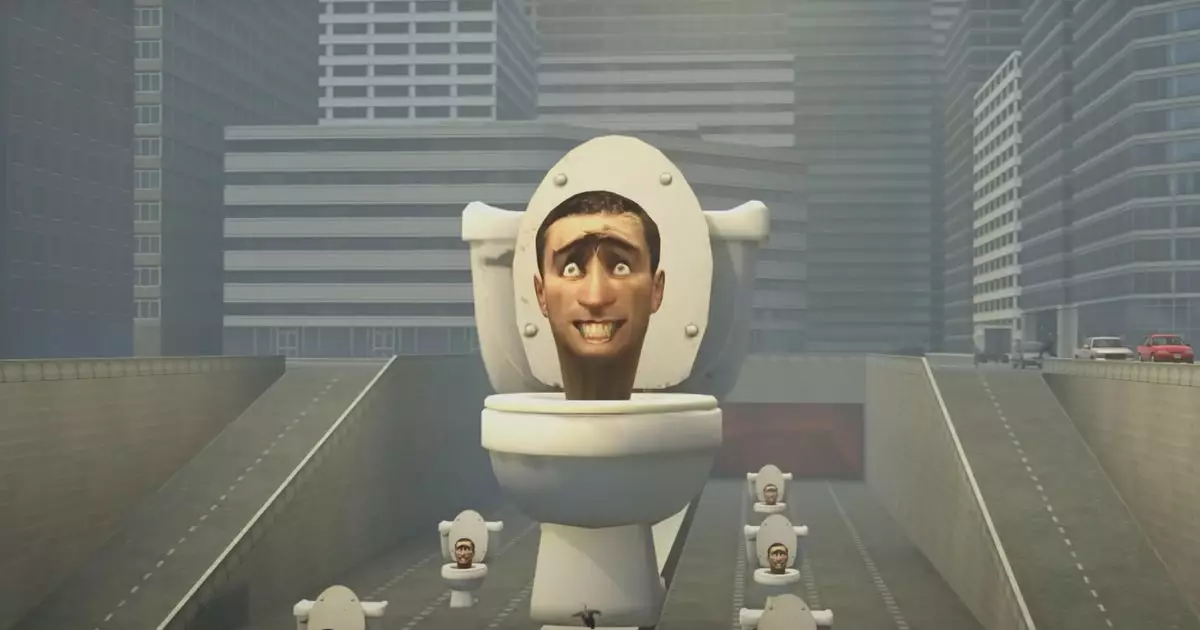
The phenomenon of Skibidi transcends mere online entertainment to become a cultural symbol of our digital age. Originally conceived as a series of surreal YouTube animations by Alexey Gerasimov, known as DaFuq!?Boom!, Skibidi has evolved far beyond its origins. What began as a humorous, chaotic clash between bizarre characters—moving toilets and camera-headed beings—has now landed a place in the prestigious Cambridge Dictionary. This transition exemplifies how modern internet humor, once confined to niche online communities, can infiltrate revered linguistic institutions and perhaps influence the broader cultural lexicon.
This shift underscores a critical point: in a world increasingly driven by viral content, the boundaries between high culture and pop culture are dissolving. The fact that such an absurd series as Skibidi is now considered worthy of dictionary inclusion highlights the expanding scope of what society deems linguistically and culturally relevant. The phrase’s ambiguity—used to denote anything from “cool” to “bad”—mirrors the fluidity of language in a digital age where meaning often shifts with context, in-jokes, or simply shared understanding among online communities.
The Significance of Meme Language and Digital Lexicon
Language evolution has always mirrored societal change, but the pace at which new slang and meme terms are adopted today is unprecedented. The addition of words like ‘skibidi’ and others such as ‘delulu’ or ‘broligarchy’ to authoritative dictionaries signals a recognition that internet-born slang is no longer ephemeral but part of linguistic history. Words like ‘skibidi’ embody more than just entertainment jargon—they represent a cultural expression, a shared experience among netizens that encapsulates humor, absurdity, and a form of digital rebellion.
This adoption raises questions about the future of language. Will traditional lexicography remain relevant, or will it be forced to continuously update to keep pace with slang that can go viral and fade away within days? More critically, the inclusion of such terms might influence how language is shaped by digital culture, embedding meme-inspired expressions into everyday speech, thereby altering communication norms.
Mythology of the Modern Era: The Rise of the Surreal and Absurd
Skibidi’s popularity and eventual recognition go beyond just internet trends; it signifies a cultural shift towards embracing the surreal and absurd as valid forms of expression. The series itself is a product of the mashup of video game assets, machinima techniques, and postmodern humor. It satirizes and celebrates the chaos of the digital landscape—a world where traditional narratives give way to experimental visuals and nonsensical humor.
This cultural embrace of the absurd can be viewed as a response to the complex, often oppressive realities of the modern age. It offers a release valve—allowing audiences to find humor and camaraderie in the bizarre. The playful yet chaotic nature of Skibidi exemplifies how digital creators are reshaping storytelling, providing new avenues for engagement, and redefining what constitutes entertainment.
The Cultural Impact and Future of Internet-Inspired Language
The broader implications of Skibidi’s ascension point toward a future where internet culture continues to influence mainstream communication. The fact that a series initially perceived as juvenile or nonsensical can attain lexical legitimacy challenges preconceived notions about quality and cultural value. It signals a democratization of culture, where grassroots digital creativity can influence institutional hierarchies.
Moreover, as meme culture persists, expect more linguistic innovations emerging from the digital underground—terms that encapsulate specific eras of online life yet gradually seep into everyday discourse. The challenge lies in how society will navigate this ever-shifting linguistic terrain—whether as unwitting participants or conscious architects of a new cultural vocabulary.
While some might dismiss Skibidi as trivial nonsense, its journey from obscurity to dictionary entry underscores its role as a mirror to our interconnected, chaotic, and highly inventive digital landscape. It is a testament to how modern creativity—no matter how surreal—can leave an indelible mark on the language and culture of tomorrow.
Leave a Reply