
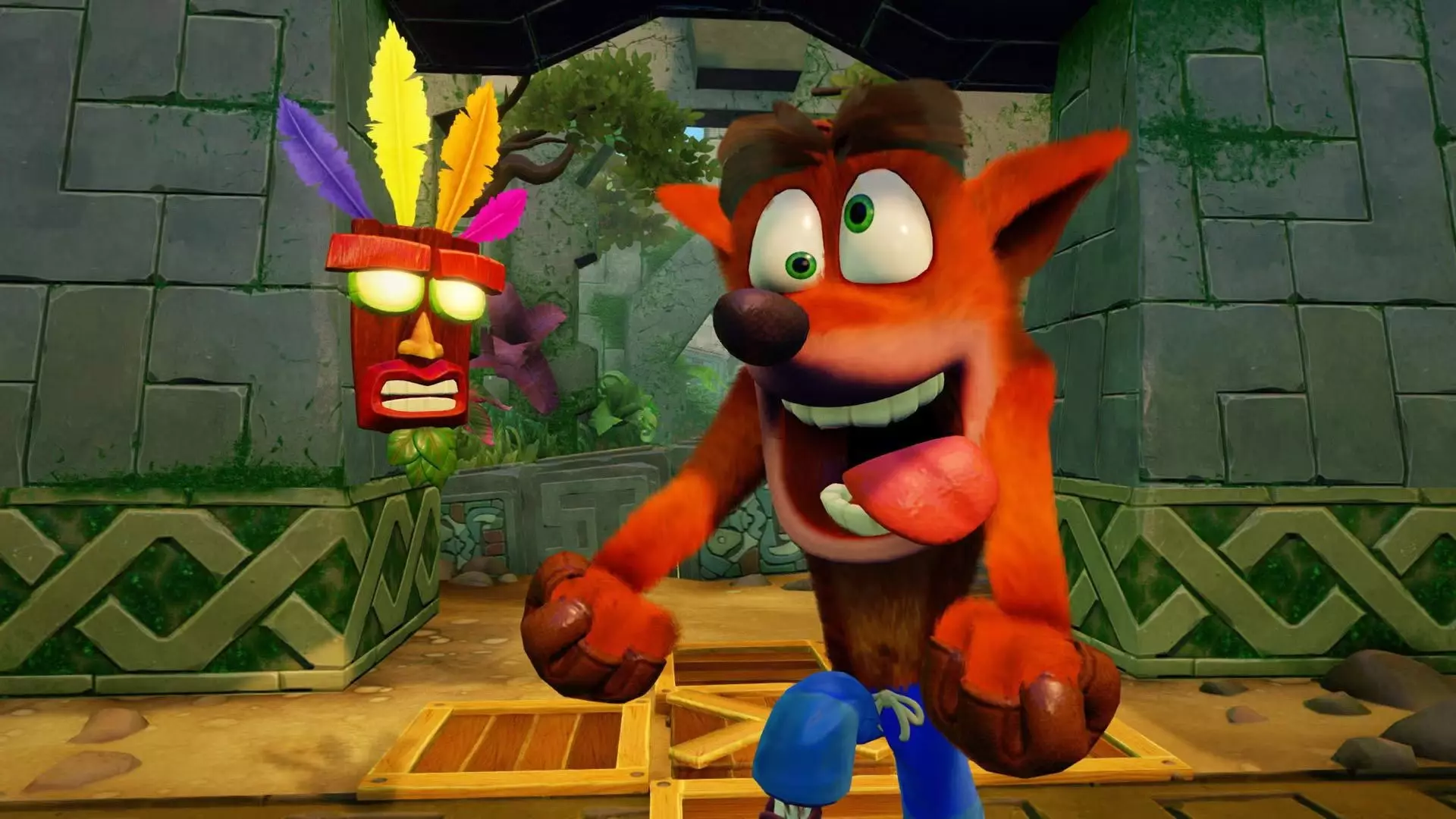
The Crash Bandicoot N.Sane Trilogy has been praised by many fans and critics alike for revitalizing a beloved franchise with stunning visuals and faithful recreations of the original gameplay. The I.P. was reborn thanks to Vicarious Visions’ commitment to preserving the game’s spirit, and its success is undeniable in terms of visual fidelity and overall nostalgia value. However, beneath the surface of this polished package lies a crucial flaw that undermines what could have been an impeccable remake: the deterioration of precise control mechanics, particularly the jump mechanics.
Andrew Gavin, the veteran behind the original Crash trilogy’s design philosophy, offers a sharp critique that exposes a fundamental oversight in the remake’s development process. While the visuals and core structure were nearly perfect, the control scheme—the soul of any platformer—was compromised. Gavin emphasizes that the small but significant technical details, such as how long the jump button is pressed, carry enormous weight in delivering a smooth and satisfying gameplay experience. The absence of a nuanced input system in the remake results in exaggerated jumps that feel inconsistent, floaty, and ultimately less responsive than the original.
The Importance of Control Fidelity in Platformers
Platformers are uniquely sensitive to the nuances of control mechanics. A game like Crash Bandicoot was painstakingly crafted around the limitations and capabilities of the original hardware, leading to clever solutions such as measuring the duration of button presses to vary jump heights. This subtle design feature endowed the game with a sense of tactile precision, making every leap and landing feel intuitive and rewarding. When this nuance is lost, the essence of what made a game great diminishes.
Gavin’s critique points out that modern remakes, despite boasting better hardware, often neglect this critical aspect, opting for simplified control schemes. This oversight transforms what should be precise, skill-based jumps into awkward, one-size-fits-all motions. As a result, the player’s confidence in executing platforming maneuvers wavers, detracting from the game’s challenge and enjoyment. This reveals a broader problem: developers sometimes prioritize visual polish over fundamental gameplay feel, risking alienating core fans who value tight controls above all.
The Consequences of Sacrificing Nuance for Accessibility
There’s an ongoing debate about whether to streamline mechanics for modern audiences unfamiliar with old-school difficulty, and Gavin’s comments reflect that tension. While accessibility is important, it should not come at the expense of preserving gameplay depth. The original Crash’s success was partly due to how its controls rewarded mastery; tiny input variations resulted in noticeably different jump outcomes. The remake’s decision to replace nuanced input measurement with a fixed, high-jump mechanic strips away that mastery layer.
This change turns the precise platforming sections into clunky, frustrating sections where skill is replaced with brute force. Instead of feeling like a natural extension of the player’s intent, jumps become unreliable, and navigating tricky sequences requires more luck than skill. The disappointment is palpable for fans who remember the original’s finely tuned feel, highlighting the importance of subtle control details in maintaining the integrity of classic games.
Remakes Should Honor the Essence, Not Just the Appearance
Gavin’s insights serve as a candid reminder that remaking a beloved classic is about more than cosmetics. It’s about translating the original experience—its challenging yet fair mechanics, its tactile sense of control—into a modern context without sacrificing what made it special. By neglecting the small but vital details of how players interact with the game, developers risk creating remasters that are visually stunning but fundamentally flawed.
While the N.Sane Trilogy excels in many ways, Gavin’s criticism underscores that even small mechanical flaws can tarnish what should be a perfect revival. A game’s feel, especially in genres that depend on precision, is less tangible but arguably more important than graphics or sound design. The goal should always be to preserve the original’s tactile magic, ensuring that the remake amplifies the experience rather than dulls it.
As the industry continues to revisit classic titles, Gavin’s critique invites developers to reflect deeply on control fidelity and the importance of nuanced mechanics. A faithful remake is not just about pixel-perfect visuals; it’s about honoring every subtle detail that makes a game timeless. Only then can modern remakes succeed in surpassing nostalgia and truly stand the test of time.
Leave a Reply