
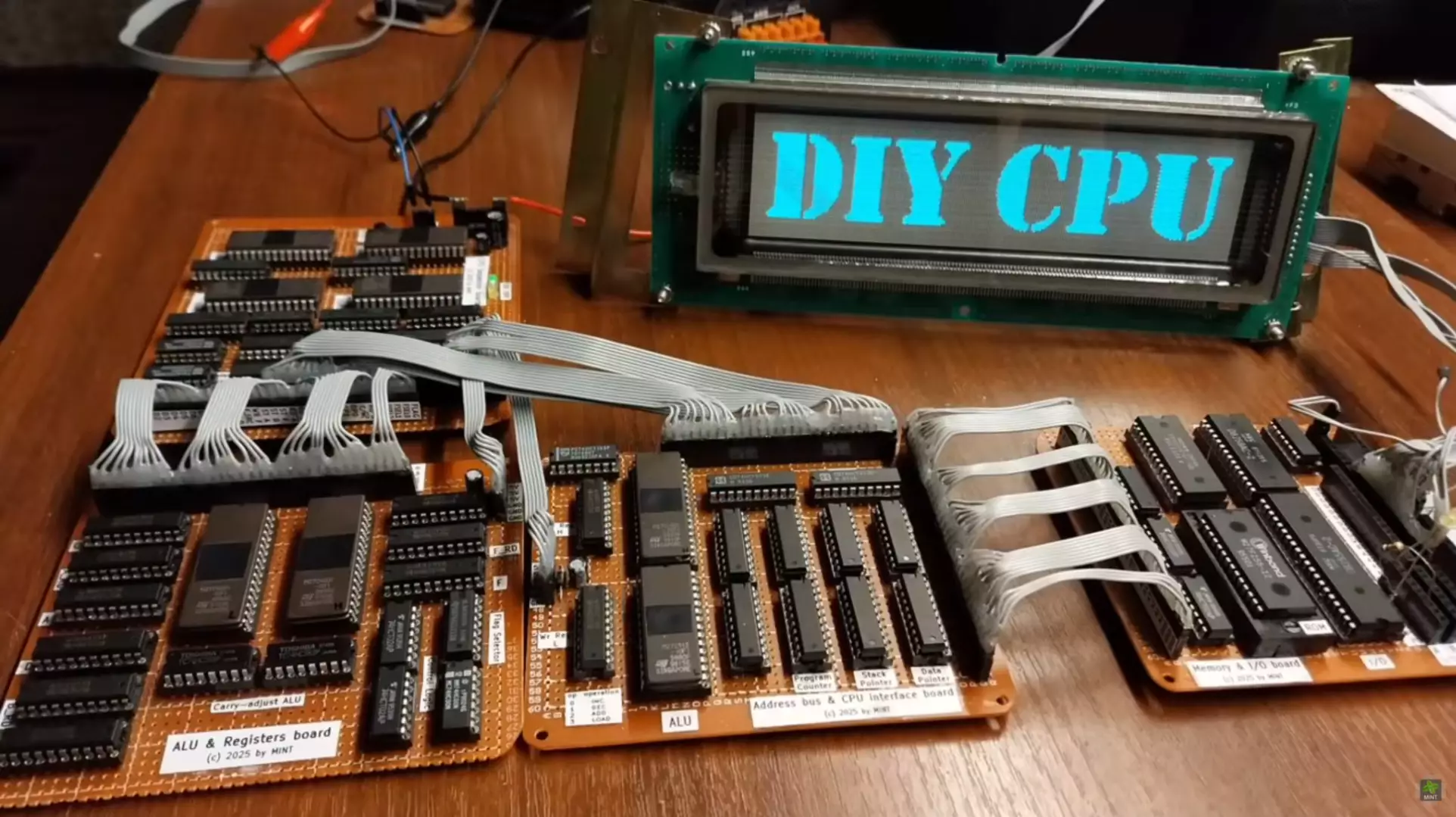
In an era where the speed and complexity of processors seem to escalate exponentially, the idea that someone could craft a functioning CPU with their own hands might sound inconceivable. Yet, a singular project by Polish YouTuber Majsterkowanie i nie tylko (MINT) pushes the boundaries of DIY electronics, demonstrating that mastery over modern microprocessors is not exclusively the domain of large corporations or specialized laboratories. Instead, it is possible, through passion, patience, and ingenuity, to breathe life into vintage components and create something genuinely remarkable. This endeavor isn’t just an experiment—it’s a bold statement about the accessibility of technology and the importance of understanding how fundamental units of modern computing operate.
The project, developed over three months, embodies a deliberate return to roots—drawing inspiration from 8-bit microprocessors like the Zilog Z80, which powered some of the earliest personal computers and laptops. MINT’s goal was to decode the complex dance of transistors and logic gates, piece by piece, and reproducing that process on a manageable scale. This isn’t merely nostalgia; it’s a deliberate exploration of the core principles that underpin everything from our smartphones to supercomputers. His consistent engagement with vintage memory chips and retro components illuminates a principle often lost amid today’s rapid tech advancements: that re-examining foundational technologies can inspire innovative thinking and build a deeper appreciation of modern systems.
From Memory Chips to a Fully Functional Processor: Technical Challenges and Artistic Triumph
The most gripping aspect of MINT’s project is not only the end result—a working CPU—but also the journey through complex problem-solving that it entailed. The process began with a simple idea: old memory chips, which many dismiss as obsolete, can be repurposed into digital logic components with a bit of ingenuity. Whether controlling a motor or lighting LEDs, these chips exhibited enough versatility to serve as the building blocks of an 8-bit processor.
What sets this project apart is the meticulous soldering, wiring, and circuit design required to turn static components into a dynamic computing system. Building a CPU from aligned memory chips isn’t straightforward; it demands an understanding of binary logic, timing, and how disparate parts communicate to execute instructions. MINT’s hours of coding, which totaled hundreds of hours, show a dedication rooted in curiosity and skill. His work challenges the misconception that digital design must be abstracted behind expensive software and corporate R&D. Instead, it proves that with patience and patience, anyone can demystify the hardware behind their favorite games or software.
By connecting his homemade CPU to a simple display and programming it to run scenes from The Matrix, MINT effectively compressed decades of technological evolution into a single microcosm. Despite its pixelated pixels and limited animation abilities, this project stands as irrefutable proof that understanding the “how” behind technology can be accessible—if not downright inspiring—for a broader audience. It’s a call to rediscover the craftsmanship behind every computer and to appreciate that innovation can be rooted in fundamental understanding.
Reclaiming Hands-On Electronics in a Digitized Age
This project isn’t merely about building a CPU for the sake of novelty; it’s a philosophical statement about the democratization of technology. In a world where increasingly complex hardware is locked behind proprietary designs and steep costs, projects like MINT’s push back against the notion that familiarity and mastery of digital components are reserved for specialists. Instead, they highlight that curiosity, combined with a willingness to experiment, can unlock a deeper connection to the devices we rely on daily.
Furthermore, this effort underscores the educational value of tinkering. While most teenagers and even adults now access computers as black boxes—pre-made, pre-programmed, and inscrutable—such DIY projects serve as instructive counterpoints. They unveil the magic behind the scenes, demystifying concepts like memory addressing, logic gates, and instruction sets. When individuals construct their own processors, they transform from passive consumers into active learners capable of innovation.
This approach is not without its challenges. Building a CPU from scratch, especially with vintage parts, requires an intersection of technical expertise, patience, and resilience. It’s a reminder that mastery over technology is attainable only through persistence—learn by doing, and understanding will follow. As such, it becomes a powerful counter-narrative to the increasingly abstracted world of modern computing, fostering a new generation of hackers, tinkerers, and engineers who see technology as something programmable and reconfigurable, not just a black box to be pressed and used.
Implications for the Future of DIY Tech and Personal Innovation
The significance of MINT’s project extends beyond a singular achievement—it prompts us to rethink how technology can evolve through grassroots initiatives. While corporations and big tech giants dominate the industry, this DIY movement reminds us that innovation is still fundamentally accessible. Building a processor from vintage chips reinforces a core truth: understanding the foundation of technology enables more meaningful engagement, customization, and perhaps even more sustainable development.
Looking ahead, this kind of accessible, hands-on innovation has the potential to inspire more users to take control of the hardware they rely on. As digital literacy improves and the maker movement continues to grow, we may see an explosion of personalized devices, educational tools, and even open-source hardware projects driven by grassroots creators. These efforts can lead to a more sustainable, inclusive, and resilient technological landscape—one where curiosity and knowledge are valued above proprietary secrecy.
While the intricacies of creating a CPU from scratch are daunting, projects like this serve as proof that it can be done, and that the skills required are not out of reach for dedicated enthusiasts. The reality is that the future of tech innovation might just hinge on a willingness to revisit humble beginnings and to re-engage with the craftsmanship of computing. When a hobbyist can assemble a working processor with vintage parts, it signals a profound shift in how we perceive the potential for individual contributions to the digital world.
Leave a Reply