
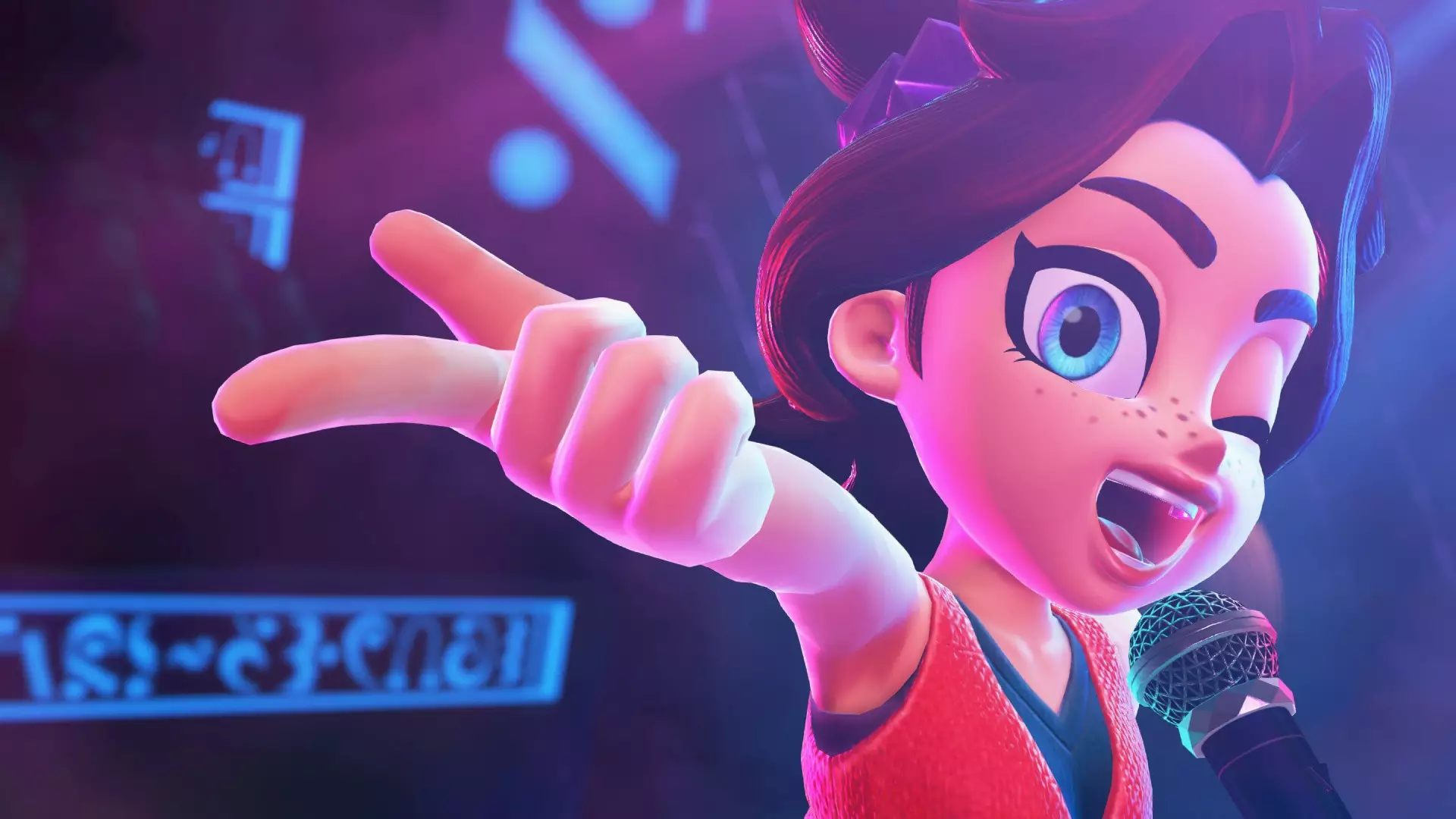
The story of Donkey Kong Bananza exemplifies how rapid advancements in gaming hardware can redefine creative possibilities. Originally conceived for Nintendo Switch 1, this game’s transition to Switch 2 is not just a matter of hardware superiority but a deliberate strategy to unlock richer, more immersive experiences. This shift embodies a broader truth: technological progress directly fuels the creative ambitions of developers, allowing them to push the boundaries of what games can achieve.
The initial development on Switch 1 relied heavily on voxel technology, emphasizing destructible environments that promised to make gameplay more visceral and engaging. However, hardware constraints naturally limited what could be achieved within the technological boundaries of the original console. As a result, developers had to innovate within these limits, often resulting in compromises that could hinder the full realization of their creative visions.
The upgrade to Switch 2 radically transforms this landscape. With significantly increased processing power, larger memory capacity, and advanced input options—including mouse controls—developers are empowered to realize ideas once thought impractical. The transition isn’t merely about better graphics but encompasses game mechanics, environmental interactions, and player engagement in ways previously constrained. In the case of Donkey Kong Bananza, the developers see Switch 2 as a catalyst for richer destruction mechanics, more expansive worlds, and enhanced co-op features. Essentially, new hardware has become a tool that enables more nuanced storytelling and gameplay depth.
Destructible Environments and Player Agency: The Heart of Innovation
Destruction mechanics are at the core of Donkey Kong Bananza’s appeal, and their evolution exemplifies how hardware can influence gameplay philosophy. On the original Switch, voxel-based destruction was already an exciting innovation. Still, its implementation was limited, with certain environmental effects feeling somewhat constrained or less elaborate. Moving to Switch 2 allows code to manage this complexity more seamlessly, creating a sense of permanence and continuity in destructible terrains.
This ongoing destructibility changes the way players perceive environments—not as static backgrounds but as living, changeable worlds. The developers highlight a key design principle: the moment when players look at terrain and wonder whether it can be broken. That suspense, that surprise, becomes more potent with the enhanced processing capabilities of Switch 2. It elevates destruction from mere visual spectacle to an integral gameplay mechanic—one that can surprise, empower, and deepen player immersion.
The shift also signifies an understanding that player agency is expanded when hardware supports more complex environmental interactions. If players see their actions matter, and if those actions have lasting effects, the game fosters a more meaningful connection. It’s not just about spectacle; it’s about creating a sense of mastery and discovery that is only possible with more powerful hardware.
The Future of Gameplay: Beyond Raw Power
The inclusion of advanced input options, such as mouse controls, demonstrates a broader vision for how hardware innovation can influence user experience. In the multiplayer context, the ability to control vocal blasts or sculpt voxels with a mouse adds a layer of tactile engagement that was unimaginable on Switch 1. This points to a future where gameplay isn’t only about graphics but about nuanced control schemes that make multiplayer sessions more interactive and fun.
This shift raises essential questions about how hardware design influences game design philosophies. Does increased power automatically lead to better games? Not necessarily. However, as with Donkey Kong Bananza, when hardware capabilities are aligned with creative goals—such as destructible environments or precise controls—the potential for innovative gameplay multiplies exponentially.
Moreover, the development process reveals a willingness among Nintendo’s teams to adapt and evolve projects in response to technological progress. Moving Mario Kart World and Donkey Kong Bananza from Switch 1 to Switch 2 development was not just a matter of upgrading graphics but creatively reimagining what these games could be. This mindset reveals that true innovation often demands flexibility and a willingness to pivot, leveraging new tools to shape more ambitious gaming worlds.
A Leap Toward a More Dynamic Gaming Ecosystem
Ultimately, the story of Donkey Kong Bananza underscores an exciting reality: hardware advancements are not just technical achievements but catalysts for storytelling and gameplay evolution. As developers harness the power of Switch 2, the gaming landscape shifts toward more dynamic, complex, and emotionally resonant experiences. It’s an evolution that should excite gamers and developers alike, promising worlds where destruction is not merely a visual effect but an integral part of storytelling and interaction.
The anticipation surrounding Donkey Kong Bananza’s release on July 17, 2025, is well-founded. It symbolizes a new era where hardware and creativity forge a symbiotic relationship, pushing the boundaries of what games can do. For those who cherish innovation, this progression isn’t just exciting—it’s a promise that future gaming experiences will be richer, deeper, and more immersive than ever before.
Leave a Reply