
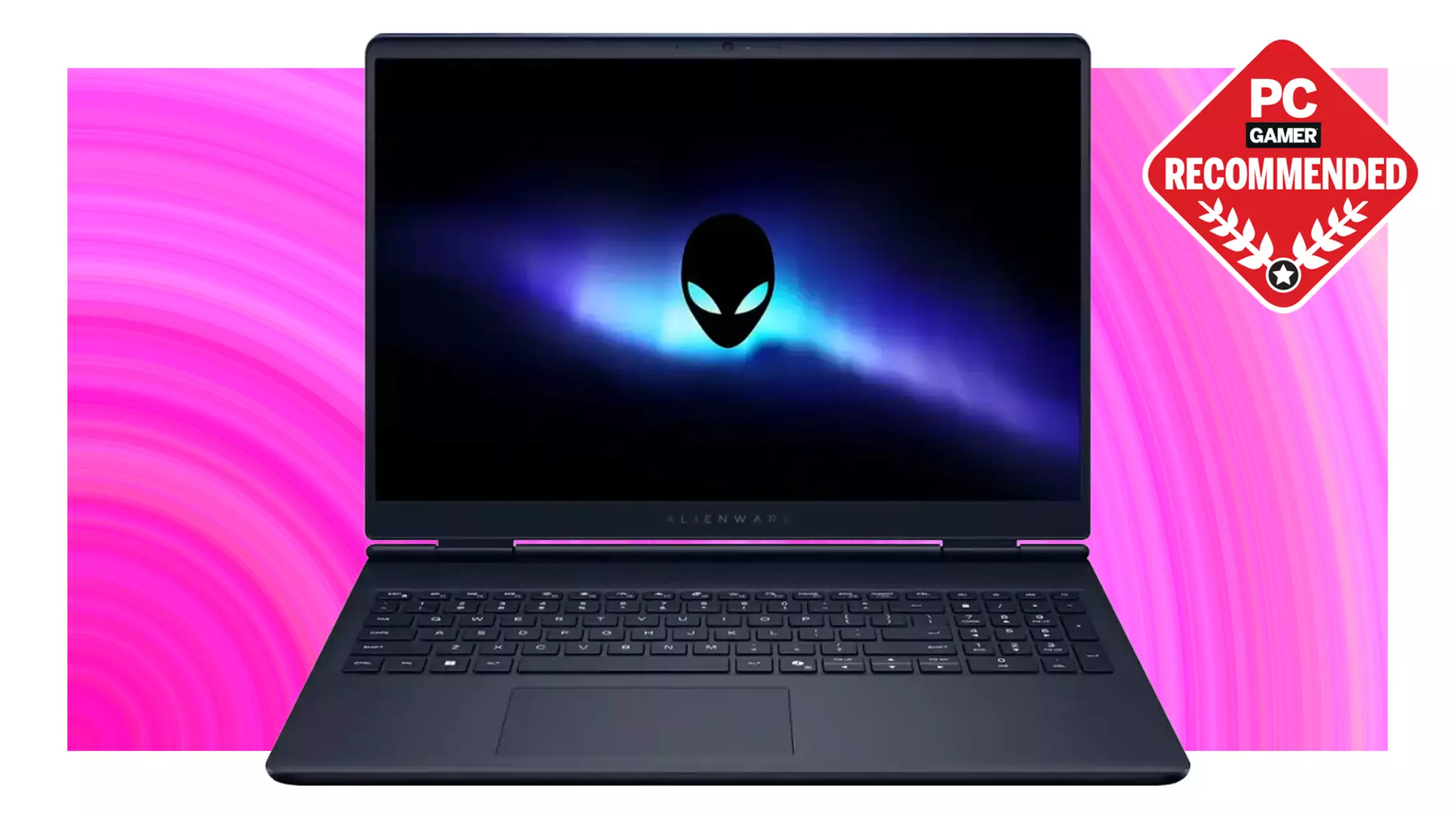
For years, Alienware has been synonymous with premium gaming rigs—machines that deliver exceptional performance but often at a steep price point. Their reputation was built on high-tier components, cutting-edge design, and a brand that garners both admiration and skepticism based on the hefty price tags. However, recent developments challenge this perception, as Alienware begins to offer more competitively priced options that verge on accessible territory. The current Prime Day deal on an Alienware RTX 50-series gaming laptop for $1,100 signals a significant shift, both in corporate strategy and consumer perception.
This price, while still anchored in premium territory, is notably lower than what many expect from Alienware’s typical lineup. It compels us to ask: Are we witnessing a strategic pivot or an anomaly dictated by market pressures? The move to offer a gaming laptop with an RTX 5060 GPU at this price point could be a game-changer—potentially broadening brand appeal and disrupting expectations around what constitutes a “budget” Alienware device.
A Closer Look at the Hardware: A Mixed Bag with Promising Aspects
The specifications on offer reveal a machine that walks a fine line between affordability and performance. The core highlight is the RTX 5060 GPU, albeit with a modest 85W power limit, reducing its gaming potential compared to its higher-wattage counterparts. Such a GPU might struggle with native 1600p gaming, especially in demanding titles, but this shortcoming is mitigated by the system’s support for DLSS 4, the latest iteration of NVIDIA’s AI upscaling technology.
DLSS 4’s ability to generate high-quality frames with fewer raw pixels pushed becomes a critical asset here. It essentially compensates for the hardware’s limitations, enabling smoother gameplay at higher resolutions and setting a new standard for what we might consider “entry-level” gaming laptops. Yet, the reliance on AI upscaling raises inevitable questions about latency, input responsiveness, and the authenticity of frame rendering—factors that heavily influence competitive gamers’ decisions.
Beyond the GPU, the system is well-equipped with a 10-core Intel CPU, 32 GB of RAM, and a fast 1-terabyte SSD—features that are usually reserved for more expensive machines. Such specs suggest that, despite the “budget” label, this Alienware could handle multitasking, modern AAA titles, and even some creative workloads without breaking a sweat.
Market Trends and Consumer Perception: The Power of AI-Driven Gaming
What’s fascinating is how innovations like DLSS 4 are reshaping gamer expectations. The notion of “faking frames” or sacrificing latency in pursuit of higher frame rates is increasingly dismissed as abjectly outdated. AI-assisted upscaling offers a compelling compromise, delivering playable frame rates at resolutions that would have been impossible a few years ago on similar hardware.
This technological leap is making it conceivable for more gamers to consider machines that would have previously been dismissed as underpowered. Alienware’s current move exemplifies how AI and graphics technology are democratizing high-quality gaming; it’s no longer solely about raw hardware but also about software enhancements that elevate hardware capabilities. Consumers are beginning to recognize that an affordable, reasonably specced machine can still deliver a robust gaming experience when equipped with the latest AI-based features.
However, it’s essential to approach this optimism with a healthy dose of skepticism. Not all games or gamers will find AI-generated frames satisfactory, especially those who prioritize precision and minimal latency, such as esports competitors. Still, for casual and mid-tier gamers, this shift can open doors previously thought closed.
Alienware’s Evolving Identity: From Luxury to Accessible Gaming
While Alienware’s legacy is built on exclusivity, this recent pricing move hints at a broader strategy—one that leverages innovation to expand the brand’s reach. The fact that a flagship gaming brand now offers a relatively affordable device suggests a recognition that the market is shifting. Economic pressures and rising hardware costs have made gaming laptops less accessible, but also more competitive.
This move might be the start of a new chapter, where Alienware begins to embrace a more inclusive approach—blurring the lines between high-end luxury and mass-market affordability. If more deals like this surface in the coming months, it could signal a paradigm shift, encouraging even die-hard fans of the brand to reconsider its offerings.
Ultimately, this is a reflection of the times: an era where technological innovation, market forces, and consumer demand converge to challenge long-held assumptions. Alienware’s latest deal feels less like a misstep and more like a calculated step toward redefining what it means to be a gaming hardware pioneer in the 21st century.
Leave a Reply