
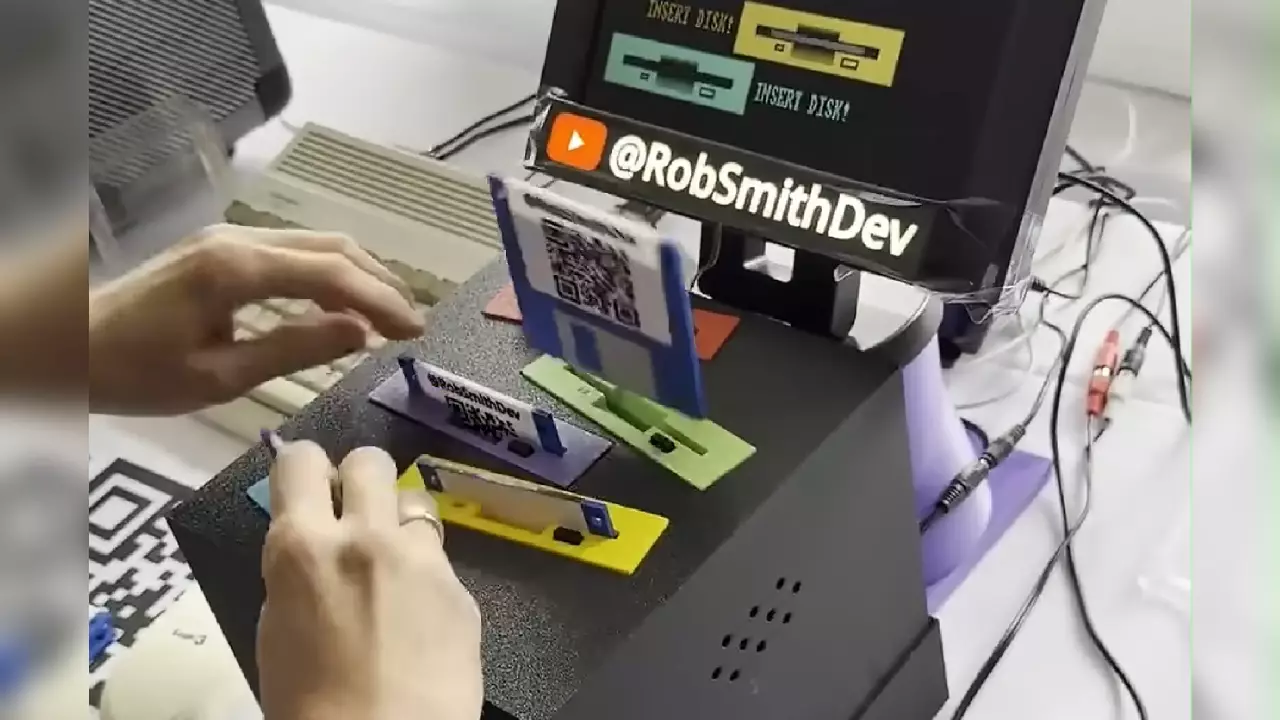
In an era dominated by sleek, high-powered gaming consoles and ultra-fast processors, it’s easy to dismiss the charm of the technology that laid the groundwork for today’s digital entertainment. However, a recent project exemplifies how nostalgia can serve as a catalyst for inventive experimentation rather than mere sentimentality. The creator, Rob Smith Dev, has crafted a machine that transforms the humble floppy disk into an interactive gaming experience—an act of technological rebellion and playful homage rolled into one. This inventive venture challenges the notion that nostalgia is passive, demonstrating instead that it can be provocatively reinterpreted through modern innovation.
What sets this project apart isn’t just its playful concept—a speed-based game that involves popping disks in and out—but the underlying craftsmanship. Smith’s approach indicates an understanding that true innovation involves blending old and new, utilizing legacy hardware in ways that surprise and delight. By designing his own linear actuators, he not only showcases mechanical ingenuity, but also emphasizes that creativity often requires hands-on problem-solving, regardless of age or experience. His approach underlines an important message: nostalgia is a fertile ground for experimentation, not just a sentimental refuge.
The Power of Artistic Revival and Technical Mastery
Beyond the technical marvels, what makes Smith’s project compelling is its artistic and cultural significance. The use of traditional programming language AMOS highlights a deliberate connection to the early days of home computing, where creativity was often constrained only by imagination. Incorporating a custom soundtrack by Hoffman, an artist with a penchant for retro devices and Amiga DJ sets, further elevates the experience. The music, with its gradual buildup and intense climax, not only adds auditory excitement but anchors the game’s retro theme in an authentic cultural context.
This fusion of technology, music, and design underscores a broader principle: nostalgia isn’t merely about reminiscing but about re-engaging with a cultural moment through fresh perspectives. Smith’s creation transforms a familiar piece of hardware into an imaginative playground—a testament to the enduring power of vintage tech when wielded with a modern twist. It’s a reminder that innovation can often be most impactful when it reveres what came before while pushing the boundaries of what’s possible today.
The Significance of Playful Rebellion Against Digital Homogeneity
In a world where gaming has become increasingly polished, predictable, and standardized, projects like DiskFight serve as defiant acts of creativity. They demonstrate that there’s still room for chaos, imperfection, and—most importantly—fun. The game’s frenetic pace and the reliance on outdated hardware remind us that playing with technology isn’t solely about efficiency; it’s also about expression, experimentation, and the joy of discovery.
Furthermore, these projects question the notion that technological progress means abandoning the past. Instead, they imply that the legacy of devices like floppy disks—once considered obsolete—continues to inspire, especially when reconfigured into art forms or interactive experiences. This act of reclamation empowers creators to see vintage hardware not as relics, but as malleable tools waiting for a new purpose. Smith’s DIY attitude exemplifies this mindset: a willingness to tinker, to fail, and ultimately to create something that breathes new life into forgotten tech.
Nostalgia as a Catalyst for Future Innovation
Overall, Smith’s DiskFight exemplifies a broader cultural shift. It highlights how nostalgia, far from being a wistful longing, can serve as a provocative force for innovation. By building a game that challenges players to manage floppy disks in a high-energy setting, he celebrates the resilience and adaptability of older technology while also inviting a new generation of enthusiasts to experiment.
This mindset encourages us to view the history of digital creation not as a linear progression away from older tech but as a layered tapestry in which each generation reinterprets and reinvents. The game’s frantic gameplay and creative hardware design demonstrate that the spirit of DIY hacking is alive and well—an essential counterpoint to the sanitized, corporate-driven trends in modern gaming. Embracing this spirit could inspire more acts of playful rebellion and inventive reimagining in the years to come, proving that the most nostalgic ideas can be the launching pads for real technological innovation.
Leave a Reply