
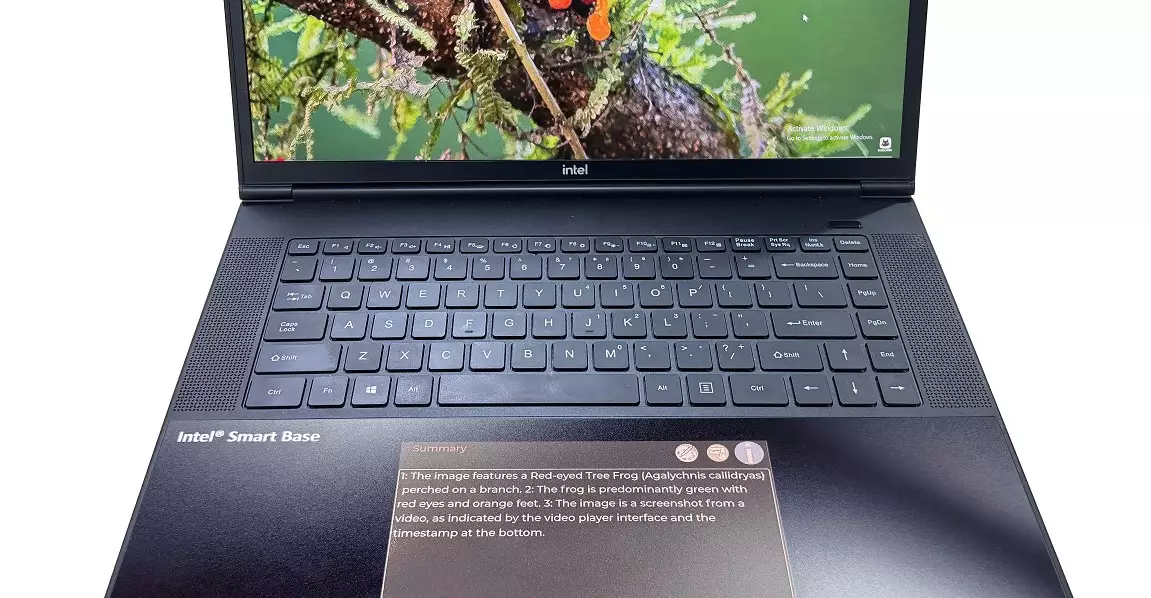
In the rapidly evolving landscape of portable computing, the pursuit of efficiency and enhanced functionality remains relentless. The introduction of E Ink’s new touchpad technology signifies a bold leap toward redefining the way users interact with their laptops. Unlike conventional touchpads that simply serve as input devices, this innovation turns the touchpad into a dynamic, purpose-driven space. It offers an alternative interface for AI applications, notifications, and quick-access tools, all while emphasizing power efficiency and minimal distraction.
This shift reflects a broader trend: reimagining internal hardware as external, flexible interfaces that can adapt to user needs. E Ink’s approach is particularly compelling because it leverages a technology familiar in e-readers—one celebrated for low power consumption and excellent readability—and repurposes it within the laptop’s touch area. Such a strategy could radically extend battery life, decrease reliance on energy-intensive displays, and ultimately elevate the user’s productivity and focus through smart, context-aware visuals.
Beyond the Secondary Screen: A Focused Hub for AI and Productivity
Many existing laptops have experimented with secondary displays, yet most fall short in delivering practical advantages. Small LCD screens embedded into touchpads or lids often feel cluttered and underutilized, creating more distraction than utility. E Ink envisions a different paradigm: a dedicated, low-power interface that reduces visual noise while enhancing functionality. Imagine having AI summaries, actionable shortcuts, or contextual information right beneath your fingers, unobtrusively displayed without competing with your primary workspace.
This design philosophy aligns with the current explosion of AI tools and virtual assistants. A persistent AI companion accessible via a persistent, always-ready display could streamline workflows in unprecedented ways. For example, while you edit a document, your AI could provide a crisp, real-time summary of key points without opening a separate window or breaking your concentration. This approach hints at a future where our laptops are not just powerful machines but intelligent, adaptive tools that seamlessly integrate into our cognitive processes.
Balancing Power, Readability, and Distraction
Although the benefits are promising, adopting E Ink’s display technology introduces potential challenges. Though color e-paper displays like Amazon Kindle Colorsoft have demonstrated viable applications, their resolution, refresh rate, and color vibrancy still trail behind traditional LCD or OLED screens. As a result, the display’s utility might be limited to textual information, notifications, or simple graphics rather than multimedia content.
Despite these limitations, E Ink’s standout advantage remains its extraordinary power efficiency. Unlike LCD and OLED screens that draw significant power even when static, E Ink only consumes energy during updates. This quality could profoundly impact laptops that host ramped-up AI features, extending battery life in scenarios where power management is critical. In essence, a low-power, always-on display that doesn’t drain the battery aligns perfectly with the demands of modern portable computing, especially as AI and real-time data processing become increasingly central to our digital routines.
Unanswered Questions and Future Possibilities
Behind the excitement, there are uncertainties that warrant scrutiny. The technical specifications of this future touchpad remain largely undisclosed. Will the displays feature full color with high resolution, or are they limited to grayscale and basic color? How seamlessly will they integrate with existing operating systems, or will they require specialized firmware? These questions highlight the uncertainties that often accompany pioneering concepts—timelines, hardware integration, and ecosystem support are crucial factors determining success.
Moreover, while the concept sounds revolutionary, its real-world adoption will depend on hardware manufacturers’ willingness to embrace this technology and incorporate it into their product lines. Will Windows, macOS, or Linux systems adapt to make the most of this distinct interface? Or will the technology remain a niche innovation, primarily appealing to enthusiasts and early adopters? These uncertainties underscore that transformative tech isn’t merely about novelty but must prove its practicality and scalability in diverse user scenarios.
This development from E Ink suggests a tantalizing glimpse of the future—one where our laptops become smarter, less power-hungry tools, and where hardware is continually reimagined to support closer integrations of AI into everyday work. The potential is vast, yet the path forward remains filled with technical, practical, and strategic questions that only time and industry collaboration can answer. For now, it’s an exciting venture into the next evolution of portable computing—one that could redefine what we expect from our devices.
Leave a Reply