
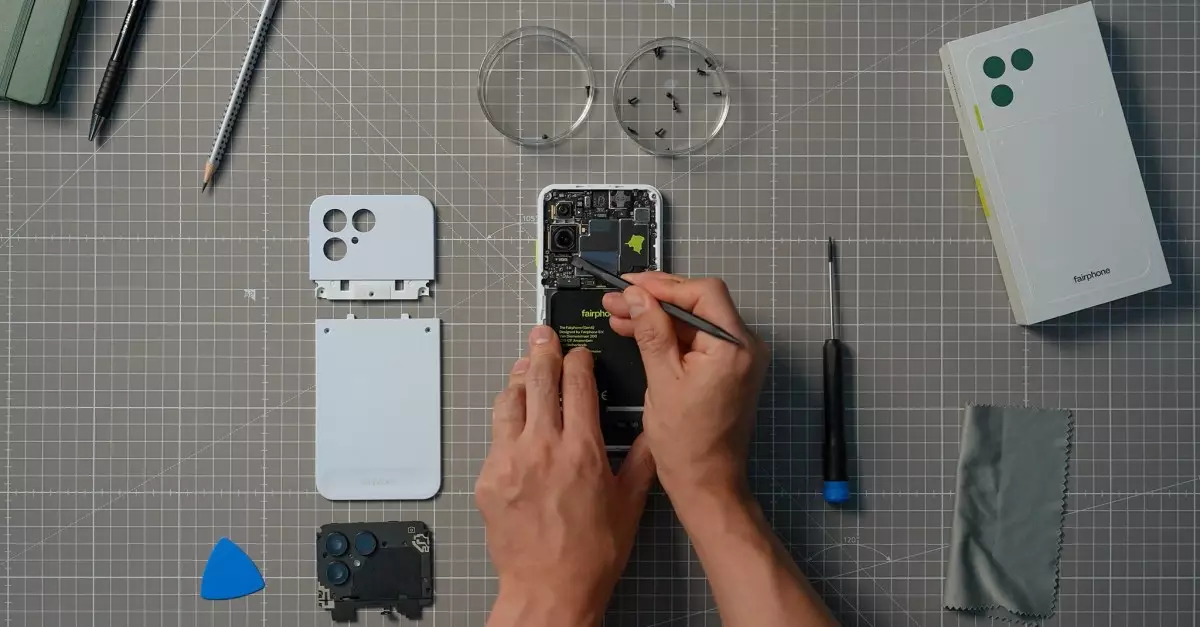
The Fairphone 6 stands out as a revolutionary device that challenges conventional norms within the smartphone industry. While many brands prioritize sleek aesthetics and raw power, Fairphone emphasizes longevity, repairability, and ecological responsibility. Its latest iteration not only continues this legacy but elevates it by earning top marks from iFixit for durability and ease of repair. This achievement is especially significant in an era where most smartphones become obsolete within a few years, submerged under complex proprietary parts and glued components, making repairs both expensive and often impossible for the average user.
The design philosophy behind the Fairphone 6 reflects a conscious move away from the disposable culture prevalent in the industry. Despite downsizing and adopting a more modular form factor, the device retains impressive repairability. This indicates that genuine sustainability in technology still hinges on simplicity and accessibility, rather than embracing fleeting trends that favor slim profiles over serviceability. In a market often driven by superficial innovations, Fairphone demonstrates that durability and user empowerment are not mutually exclusive but can coexist beautifully.
Reimagining Repairability: From Limited to Practical
One of the most compelling aspects of the Fairphone 6 is how it balances repairability with modern technological demands. Although it no longer boasts tool-free battery replacements—a shift driven by the need for a slimmer design—the device remains remarkably user-friendly in terms of repairs. With just seven screws and a straightforward, T5 Torx screwdriver, users can replace crucial components like the battery or camera sensors. This minimal screwdriver set reduces the barrier for repairs, empowering everyday users to extend their phone’s life without specialized skills or costly services.
It’s noteworthy that Fairphone openly advocates for DIY repairs, with clear instructions and readily available replacement parts. The hardware’s simplicity, combined with a carefully thought-out modular structure, defies the narrative that modern smartphones must be complex and irreparable. The use of minimal adhesive—restricted only to the mainboard—further facilitates repairs, an intentional move against industry norms. By restricting adhesive in most areas, Fairphone champions a repair-friendly model that not only prolongs device lifespan but also fosters a culture of responsible consumption.
Balanced Performance with a Green Conscience
While the Fairphone 6 doesn’t push the envelope when it comes to raw performance—featuring a modest Snapdragon 7S Gen 3 chipset and average dual rear cameras—it is perfectly aligned with its core mission: sustainability and longevity. The device shines in aspects that matter for most users wishing for a reliable daily driver rather than a gaming powerhouse. Its 6.3-inch LTPO OLED display offers a fluid refresh rate of up to 120Hz, making everyday interactions smooth and visually appealing.
The IP55 rating, although not the highest available, signifies a respectable level of resistance against water and dust, especially considering the phone’s screw-based construction as opposed to glued seals. This resilience, combined with a guarantee of seven years of Android updates and secure patches, positions the Fairphone 6 as a long-term investment rather than a fleeting gadget. Fairphone’s commitment to supporting its devices well into the future exemplifies how technology can align with environmental goals while still providing value to users.
Redefining Industry Expectations and Consumer Responsibility
The true innovation of Fairphone lies beyond specifications and into the ethics of manufacturing and support. Its pricing might appear steep—averaging around $700 in Europe and nearly double that in the US—but this reflects a holistic approach to sustainability, repairability, and support. The five-year warranty and long-term software support challenge the industry standard, which often offers minimal software updates leading to premature obsolescence.
Furthermore, the availability of pre-order options, along with the inclusion of accessories and customizable backplates, invites users to take ownership of their devices. The shift to a privacy-focused, de-Googled OS in the US via Murena reinforces that this phone is more than just a piece of technology; it’s a statement about empowering consumers to choose responsible and repairable devices over cheap, expendable alternatives.
In an industry obsessed with incremental upgrades and proprietary parts, the Fairphone 6 represents a bold assertion: responsible innovation is possible and desirable. It challenges manufacturers, consumers, and the entire tech ecosystem to reconsider priorities—favoring sustainability, repairability, and ethical manufacturing over fleeting trends and obsolescence. The device, in essence, symbolizes the future of conscientious technology—one where longevity, user empowerment, and environmental respect are core principles driving progress.
Leave a Reply