
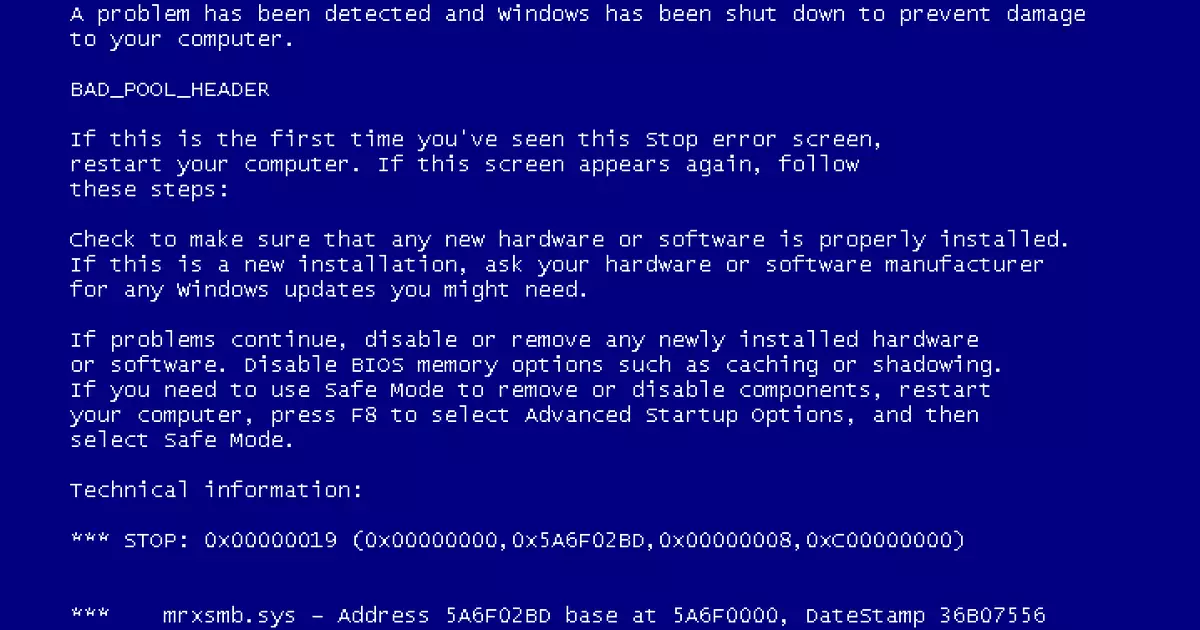
There’s an intriguing cultural phenomenon that resonates with festival-goers: the collective cries of distress transformed into a communal experience. At the Reading music festival in the UK, one could find themselves nestled in their sleeping bag, only to be stirred from slumber by a resounding chorus of “bollocks!” echoing through the campgrounds. What begins as a murmured discontent transforms into a thunderous roar, creating a unique bond among campers. It’s a celebration of shared annoyance, a quintessentially human reaction to a common pain. Similarly, in the realm of technology, the infamous Blue Screen of Death (BSOD) has transcended mere frustration; it has evolved into a shared experience of dismay and nostalgia, reverberating throughout the tech community.
Redefining Iconic Moments
When I stumbled upon multiple headlines referring to the BSOD as “iconic”, I couldn’t help but reflect on the implications of labeling tech failures as legends. The BSOD has been a stubborn companion for Windows users since its inception in 1985. It has, in many ways, become a rite of passage for new users faced with the stark reality of technological fallibility. Encounters with the BSOD evoke a visceral reaction, much like the bewilderment experienced during those festival nights. Yet, as annoying as it may be, the moment has garnered a sort of mythic status; its notoriety has been elevated to a folk legend, transforming annoyance into cultural memory.
Microsoft’s recent decision to replace the notorious Blue Screen with a new Black Screen of Death (BlackSOD) reflects an attempt to enhance user experience by simplifying error communication. David Weston, Microsoft’s VP of enterprise and OS security, asserted that the shift seeks to provide clearer information about technical issues, demonstrating the company’s desire to cultivate a sense of resilience in a world obsessed with productivity. However, amidst this seemingly pragmatic move lies an implicit acknowledgment of the emotional echoes resonating in every frustrated user’s heart.
The Legacy of Tech Mishaps
Investigating Microsoft’s history with the BSOD unveils a lineage of comedic misfortune. Other tech brands have, in their own rights, contributed memorable failures to the pantheon of tech lore. The Xbox 360’s infamous Red Ring of Death sent gamers into fits of exasperation, while Apple users could only sigh at the Sad Mac. Each of these incidents has forged a connection among users, creating a shared narrative of frustration. While the legacy of these tech mishaps is often littered with disappointment, they have also fostered community through mutual experience.
In a day and age where technology frequently lets us down, our collective responses have morphed into a symbolic expression of emotional release. The mockery surrounding these failures, including the BSOD, serves as a cathartic release valve, allowing users to unite in their shared anger. It’s reminiscent of the “bollocks” ritual at festivals—a collective shrug toward our collective inconveniences. Perhaps, in celebrating these frustrations, we allow ourselves to embrace the imperfections in an increasingly flawless tech narrative.
A Brave New Era of Technology
Yet, in the shadow of nostalgia lies a pressing reality. As Microsoft embraces change within their systems, the question remains: How can users find solace amidst the inevitable failures of technology? The digital landscape is laden with threats, as revealed during the widespread outages experienced last year. These events resonate with a primal instinct to shout “bollocks” as systems crash and crumble. Resilience within technology today isn’t merely about reacting to failures; it’s about anticipating them in an environment where we can scarcely fathom the extent of potential breakdowns.
In a world where Microsoft has recently provided AI technology to military forces, the paradox of feeling empowered yet exposed looms large. The juxtaposition of profit and moral choice permeates the tech industry, where billions are churned out amidst whispers of layoffs and ethical dilemmas. Perhaps the BSOD reflects a deeper truth in our lives: we must grapple with the duality of innovation and imperfection, understanding that, much like those festival-goers, we are bound together by our responses to shared misfortune.
In the face of such a complex narrative, our journey with technology becomes less about flawless execution and more about the cultural touchpoints of how we collectively react to the chaos, be it through cries of “bollocks” or the muted acceptance of a Black Screen of Death.
Leave a Reply