
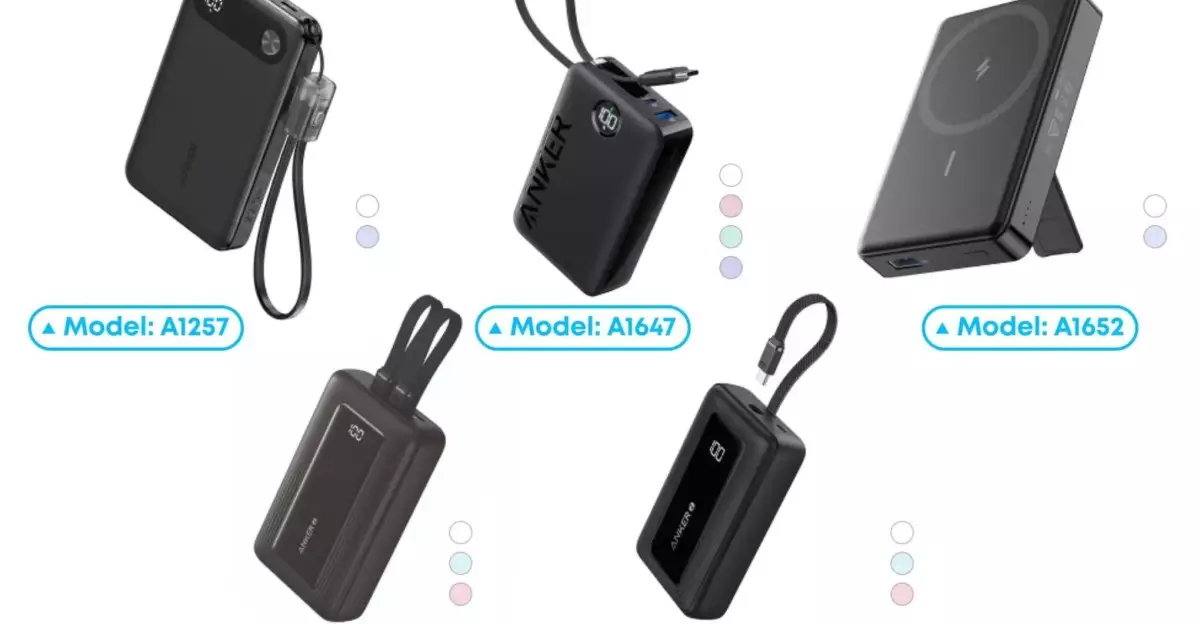
In recent weeks, Anker, a company celebrated for its reliable and innovative charging solutions, has faced mounting scrutiny over safety issues related to several of its power bank models. The emergence of recalls should serve as a wake-up call not just for Anker, but for consumers who depend on these gadgets for their everyday needs. With this being Anker’s second recall this month, the message is clear: consumers must exercise caution and remain attentive to the potential risks associated with lithium-ion batteries.
Anker’s announcement highlighted the immediate necessity to halt usage of five specific power bank models — including the MagGo and Zolo lines — due to fears around overheating and the possibility of smoke and fire. Such risks often symbolize deeper, systemic problems in manufacturing processes, raising questions about quality control within the company and the supply chain involved in sourcing critical components.
Understanding the Recall Mechanics
The products affected in this latest recall — notably Anker Power Bank models A1257, A1647, and others — pinpoint a wider issue within the tech industry, where lithium-ion battery safety has evolved into a topic of increasing concern. Anker stresses that while the chance of malfunction is deemed minimal, they are opting for a precautionary approach. One can question whether such disclaimers adequately instill confidence among consumers. Skepticism may prevail, particularly given the recent fires reported connected to the earlier model A1263.
The proactive step of offering either a free replacement or a gift card to affected customers showcases Anker’s attempt to manage the fallout effectively. However, the absence of a clear timeline for when the problematic power banks were sold raises alarm bells. If some models were still being sold up until the announcement, one is compelled to wonder about the regulatory oversights that allowed such products to remain in circulation.
The Implications for Consumers
For consumers, this recall underscores a critical decision-making moment: to keep or to dispose? Anker recommends that users safely dispose of these hazardous devices at designated lithium-ion battery disposal facilities. This technical albeit careless recommendation demonstrates the company’s duty of care, yet it also places the burden of responsibility squarely on the shoulders of consumers. The fear of causing a fire or safety hazard in their homes or workplaces elevates the urgency to act promptly.
Navigating Anker’s recall process demands additional effort from consumers who must locate their product serial numbers and submit claims. The hassle associated with these steps can dishearten an already inconvenienced customer base. Additionally, there might be a lingering resentment from those who feel betrayed by a brand they once deemed trustworthy. The stakes are high, and the emotional toll of this mismatch between consumer expectations and corporate accountability cannot be understated.
The Broader Industry Perspective
As Anker grapples with this recall, the implications shake the broader tech industry. With an increased public consciousness surrounding product safety, other companies may soon find themselves under inspection for similar issues. Consumers are likely to raise their expectations, demanding transparency and accountability from brands that prioritize profit over safety.
In an arena increasingly dominated by rapid technological advancements and increased competition, the practice of “out-of-sight, out-of-mind” must no longer be tolerated. Competitors should take heed, as any lapse in their quality assurance practices could lead to dire consequences, from safety hazards to financial losses arising from product recalls.
This harsh reality serves as a reminder that no product — no matter how celebrated — is infallible. As they navigate through this tumultuous time, Anker and others like it must recalibrate their approach to safety to regain consumer trust and deliver on their commitment to quality and reliability. The focus should shift from merely managing crises to embedding safety as a pivotal component of product development and corporate ethics. The path ahead will undoubtedly be challenging, but it is crucial for maintaining a sustainable future in technology.
Leave a Reply