
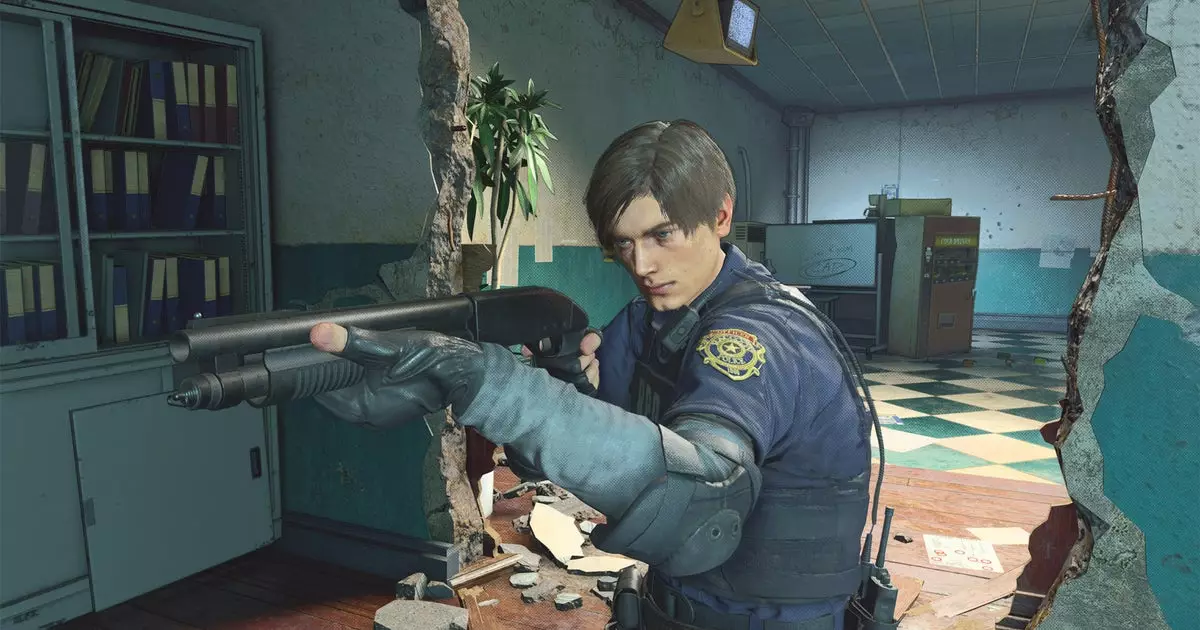
In a move that felt all too predictable, Capcom has officially axed Resident Evil Re:Verse, their multiplayer endeavor meant to celebrate the 25th anniversary of the beloved franchise. This game, with its lackluster reception and player base barely creeping over a couple thousand, has been thrown into the abyss along with its server listings and downloadable content. It’s a stark reminder of how difficult it can be to translate a single-player horror game into a collaborative online experience. With Re:Verse’s failure making headlines, one can’t help but question Capcom’s strategic decision-making in the face of such adversity.
Re:Verse, positioned as a six-player third-person shooter, was packed with references and nods to the classic elements of the Resident Evil series. Players had the chance to embody iconic antagonists, such as Jack Baker, as they fought it out in chaotic matches. This concept had immense potential, yet the execution of this idea fell flat. In an era where multiplayer experiences are anticipated to be groundbreaking and engaging, Re:Verse’s reception was tepid at best. With the player count peaking at 2080 on Steam, one could easily argue that the game was not just struggling but suffering a graveyard of player apathy.
A Legacy of Mediocrity
Capcom’s history with Resident Evil multiplayer projects has been a mixed bag. With attempts ranging from the critically panned Operation Raccoon City to the creatively promising Resident Evil: Outbreak, the company has rarely managed to hit the mark. Resident Evil 5 ventured into co-op play with slightly more success, hinting at the potential for a multiplayer format, but even then, it failed to resonate as an enduring experience.
The mere thought of placing Resident Evil’s tension-filled narrative into a multiplayer framework seems ambitious, yet it often leads to muddled gameplay outcomes. It’s as if Capcom was trying to mesh oil and water. The thrill of solitary survival and a slow-building atmosphere that defines the franchise is lost when players team up to shoot down waves of zombies and other nefarious creatures. The excitement of isolation is sacrificed on the altar of collaborative gameplay.
Capcom’s Missed Opportunity and the Future
So, what does the demise of Re:Verse mean for the future of Resident Evil multiplayer? The truth is that Capcom’s pursuit of multiplayer formats has not only been a frustrating endeavor but also a missed opportunity. Instead of exploiting the franchise’s narratives and character depth to create an immersive online experience, they’ve relied on haphazard mechanics and lackluster execution. A franchise so rich in lore could certainly support an online landscape ripe for exploration, yet each attempt feels like an unconvincing reimagining of a beloved classic.
Capcom’s recent developer interviews from the Resident Evil Requiem reveal that they are not ready to abandon their dreams of multiplayer potentials entirely. They stated that they briefly toyed with another online-focused Resident Evil project before pivoting towards a more traditional approach. Perhaps this pivot comes from acknowledgment that the essence of Resident Evil lies in its ability to evoke fear and tension, attributes that are easily diluted in a multiplayer setting.
It’s perplexing to witness Capcom cling to the idea of multiplayer when their successes in crafting single-player horror stories are monumental. They’ve shown time and again that they can deliver exceptional narratives and disturbing atmospheres. Thus, the question becomes: why not channel those strengths into captivating single-player experiences that expand the lore and depth of the universe, instead of forcing a square peg into a round hole?
The Broader Message in Re:Verse’s Demise
The downfall of Resident Evil Re:Verse serves as a cautionary tale: not all beloved franchises can or should venture into the realm of multiplayer. As expectations continue to rise in gaming, there’s an increasing need for developers to recognize what makes their franchises beloved in the first place. Historically, Resident Evil revolves around an immersive narrative and chilling atmosphere—qualities that can easily be overshadowed in a frantic multiplayer climate.
In the end, Capcom may need to reassess their future endeavors, balancing the nostalgia and expectations of franchise enthusiasts with the demands of the modern gaming landscape. If they remain steadfast in their pursuit of multiplayer, they’d do well to closely examine not only their past failures but also the very essence of what makes Resident Evil a timeless classic.
Leave a Reply